

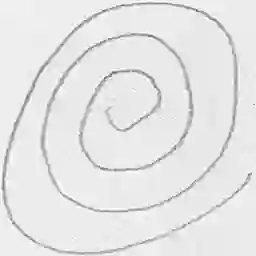
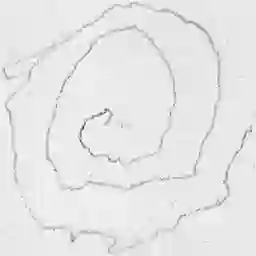
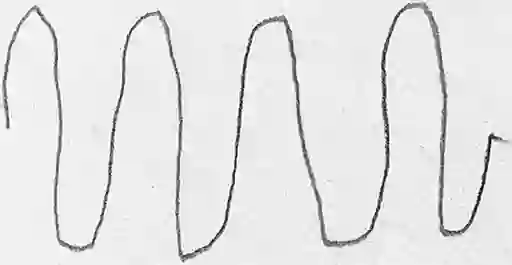
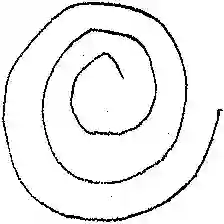
Parkinson's disease (PD) is a progressive neurodegenerative condition characterized by the death of dopaminergic neurons, leading to various movement disorder symptoms. Early diagnosis of PD is crucial to prevent adverse effects, yet traditional diagnostic methods are often cumbersome and costly. In this study, a machine learning-based approach is proposed using hand-drawn spiral and wave images as potential biomarkers for PD detection. Our methodology leverages convolutional neural networks (CNNs), transfer learning, and attention mechanisms to improve model performance and resilience against overfitting. To enhance the diversity and richness of both spiral and wave categories, the training dataset undergoes augmentation to increase the number of images. The proposed architecture comprises three phases: utilizing pre-trained CNNs, incorporating custom convolutional layers, and ensemble voting. Employing hard voting further enhances performance by aggregating predictions from multiple models. Experimental results show promising accuracy rates. For spiral images, weighted average precision, recall, and F1-score are 90%, and for wave images, they are 96.67%. After combining the predictions through ensemble hard voting, the overall accuracy is 93.3%. These findings underscore the potential of machine learning in early PD diagnosis, offering a non-invasive and cost-effective solution to improve patient outcomes.
翻译:帕金森病(PD)是一种进行性神经退行性疾病,其特征为多巴胺能神经元死亡,导致多种运动障碍症状。早期诊断PD对于预防不良后果至关重要,然而传统诊断方法通常繁琐且成本高昂。本研究提出一种基于机器学习的方法,利用手绘螺旋线与波形图像作为PD检测的潜在生物标志物。我们的方法结合卷积神经网络(CNN)、迁移学习及注意力机制,以提升模型性能并增强其抗过拟合能力。为增加螺旋线与波形图像类别的多样性与丰富度,训练数据集通过数据增强技术扩充图像数量。所提出的架构包含三个阶段:利用预训练CNN、集成自定义卷积层以及集成投票机制。通过采用硬投票策略聚合多个模型的预测结果,进一步提升了性能。实验结果显示该方法取得了良好的准确率:对于螺旋线图像,加权平均精确率、召回率与F1分数均为90%;对于波形图像,上述指标均为96.67%。通过集成硬投票合并预测结果后,整体准确率达到93.3%。这些发现凸显了机器学习在早期PD诊断中的潜力,为改善患者预后提供了一种非侵入性且经济高效的解决方案。





相关内容



 微信扫码咨询专知VIP会员