

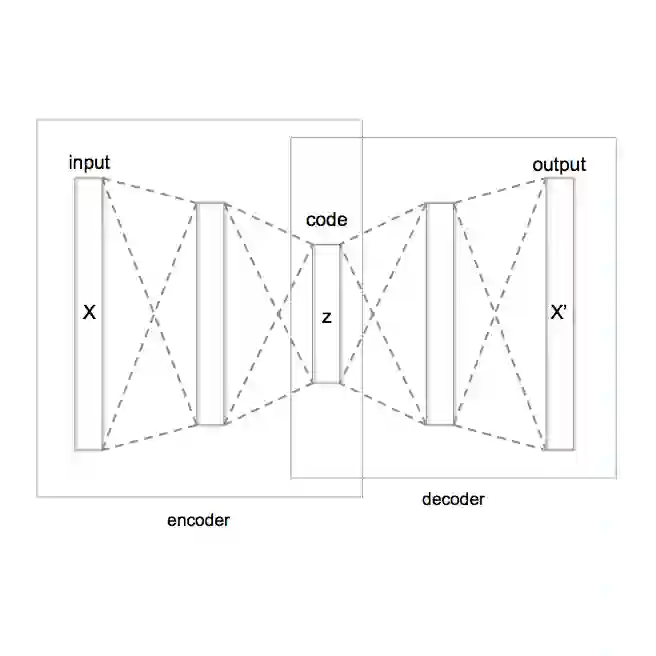
Inference and prediction under partial knowledge of a physical system is challenging, particularly when multiple confounding sources influence the measured response. Explicitly accounting for these influences in physics-based models is often infeasible due to epistemic uncertainty, cost, or time constraints, resulting in models that fail to accurately describe the behavior of the system. On the other hand, data-driven machine learning models such as variational autoencoders are not guaranteed to identify a parsimonious representation. As a result, they can suffer from poor generalization performance and reconstruction accuracy in the regime of limited and noisy data. We propose a physics-informed variational autoencoder architecture that combines the interpretability of physics-based models with the flexibility of data-driven models. To promote disentanglement of the known physics and confounding influences, the latent space is partitioned into physically meaningful variables that parametrize a physics-based model, and data-driven variables that capture variability in the domain and class of the physical system. The encoder is coupled with a decoder that integrates physics-based and data-driven components, and constrained by an adversarial training objective that prevents the data-driven components from overriding the known physics, ensuring that the physics-grounded latent variables remain interpretable. We demonstrate that the model is able to disentangle features of the input signal and separate the known physics from confounding influences using supervision in the form of class and domain observables. The model is evaluated on a series of synthetic case studies relevant to engineering structures, demonstrating the feasibility of the proposed approach.
翻译:在物理系统部分知识下的推理与预测具有挑战性,特别是当多个混杂源共同影响测量响应时。由于认知不确定性、成本或时间限制,在基于物理的模型中显式考虑这些影响通常不可行,导致模型无法准确描述系统行为。另一方面,变分自编码器等数据驱动的机器学习模型无法保证获得简约的表征,因此在有限且含噪声数据条件下可能泛化性能较差且重建精度不足。我们提出一种物理信息变分自编码器架构,该架构结合了基于物理模型的可解释性与数据驱动模型的灵活性。为促进已知物理规律与混杂影响的解耦,潜在空间被划分为参数化基于物理模型的物理意义变量,以及捕捉物理系统领域与类别变异性的数据驱动变量。编码器与解码器耦合,该解码器整合了基于物理的组件与数据驱动的组件,并通过对抗性训练目标进行约束,防止数据驱动组件覆盖已知物理规律,从而确保基于物理的潜在变量保持可解释性。我们证明该模型能够利用类别和领域观测值形式的监督,解耦输入信号特征并将已知物理规律与混杂影响分离。通过一系列与工程结构相关的合成案例研究对该模型进行评估,验证了所提方法的可行性。




相关内容



 微信扫码咨询专知VIP会员