

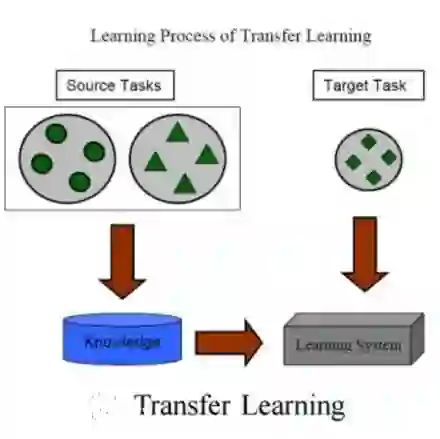
While conditional diffusion models have achieved remarkable success in various applications, they require abundant data to train from scratch, which is often infeasible in practice. To address this issue, transfer learning has emerged as an essential paradigm in small data regimes. Despite its empirical success, the theoretical underpinnings of transfer learning conditional diffusion models remain unexplored. In this paper, we take the first step towards understanding the sample efficiency of transfer learning conditional diffusion models through the lens of representation learning. Inspired by practical training procedures, we assume that there exists a low-dimensional representation of conditions shared across all tasks. Our analysis shows that with a well-learned representation from source tasks, the samplecomplexity of target tasks can be reduced substantially. In addition, we investigate the practical implications of our theoretical results in several real-world applications of conditional diffusion models. Numerical experiments are also conducted to verify our results.
翻译:尽管条件扩散模型在各种应用中取得了显著成功,但它们需要大量数据从头开始训练,这在实际中往往难以实现。为解决这一问题,迁移学习已成为小数据场景下的关键范式。尽管其经验上取得了成功,条件扩散模型迁移学习的理论基础仍未得到探索。本文首次尝试通过表征学习的视角来理解条件扩散模型迁移学习的样本效率。受实际训练过程的启发,我们假设存在一个跨所有任务共享的低维条件表征。我们的分析表明,通过从源任务中学习到良好的表征,目标任务的样本复杂度可以显著降低。此外,我们还在条件扩散模型的若干实际应用中探讨了理论结果的实际意义。数值实验也验证了我们的结论。




相关内容




 微信扫码咨询专知VIP会员