

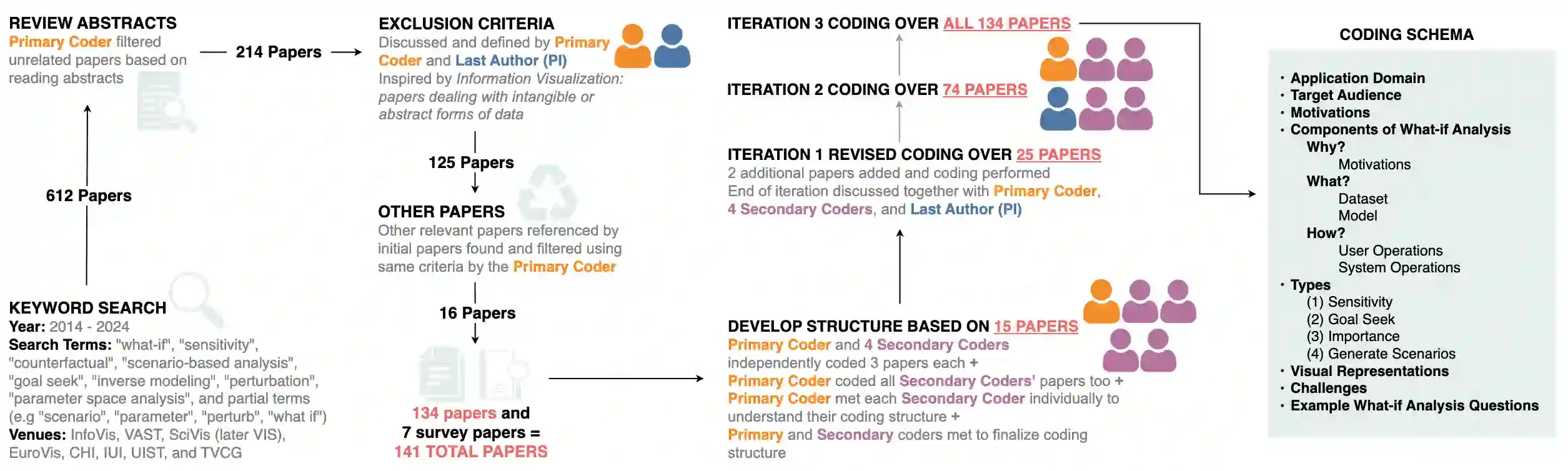
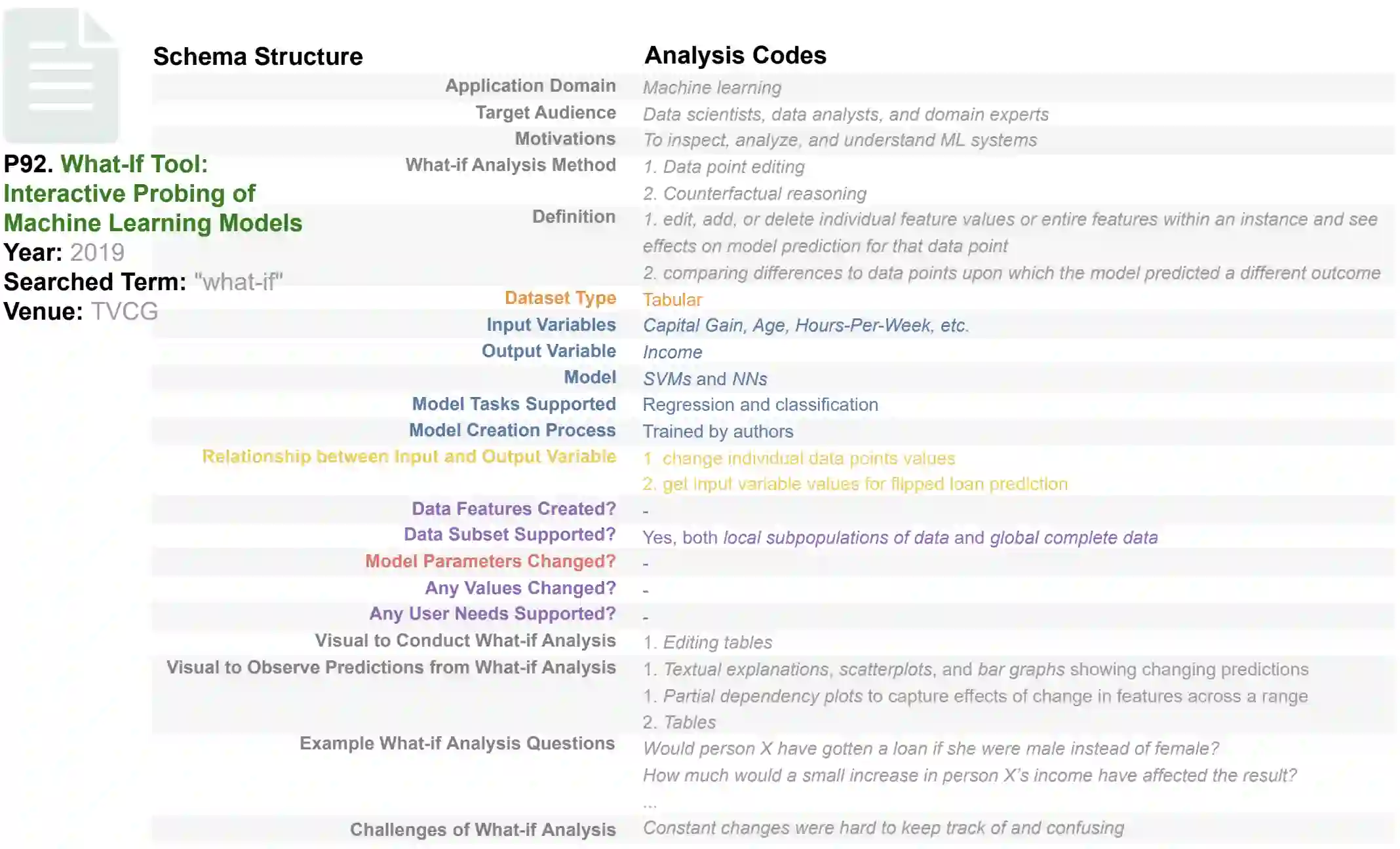
Various analytical techniques-such as scenario modeling, sensitivity analysis, perturbation-based analysis, counterfactual analysis, and parameter space analysis-are used across domains to explore hypothetical scenarios, examine input-output relationships, and identify pathways to desired results. Although termed differently, these methods share common concepts and methods, suggesting unification under what-if analysis. Yet a unified framework to define motivations, core components, and its distinct types is lacking. To address this gap, we reviewed 141 publications from leading visual analytics and HCI venues (2014-2024). Our analysis (1) outlines the motivations for what-if analysis, (2) introduces Praxa, a structured framework that identifies its fundamental components and characterizes its distinct types, and (3) highlights challenges associated with the application and implementation. Together, our findings establish a standardized vocabulary and structural understanding, enabling more consistent use across domains and communicate with greater conceptual clarity. Finally, we identify open research problems and future directions to advance what-if analysis.
翻译:在多个领域中,诸如场景建模、敏感性分析、基于扰动的分析、反事实分析和参数空间分析等各种分析技术被用于探索假设情景、检验输入输出关系以及识别达成期望结果的路径。尽管命名不同,这些方法共享共同的概念与方法,表明它们可以统一在假设分析之下。然而,目前缺乏一个统一的框架来定义其动机、核心组成部分及其不同类型。为填补这一空白,我们回顾了来自领先的可视化分析与人机交互会议(2014-2024年)的141篇文献。我们的分析(1)概述了假设分析的动机,(2)介绍了Praxa——一个识别其基本组成部分并刻画其不同类别的结构化框架,以及(3)强调了与应用和实现相关的挑战。综合来看,我们的研究结果建立了一个标准化的词汇和结构化的理解,使得跨领域的使用能够更加一致,并以更清晰的概念进行交流。最后,我们指出了开放的研究问题及未来方向,以推动假设分析的发展。




相关内容



 微信扫码咨询专知VIP会员