

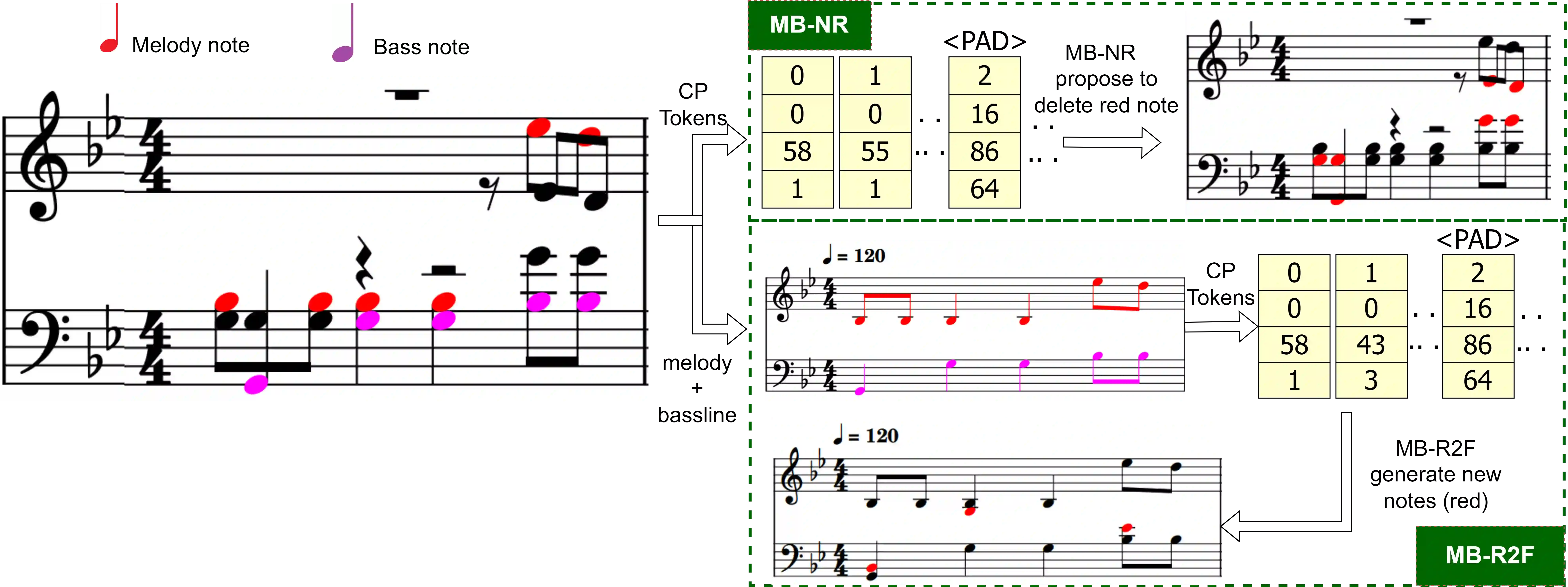
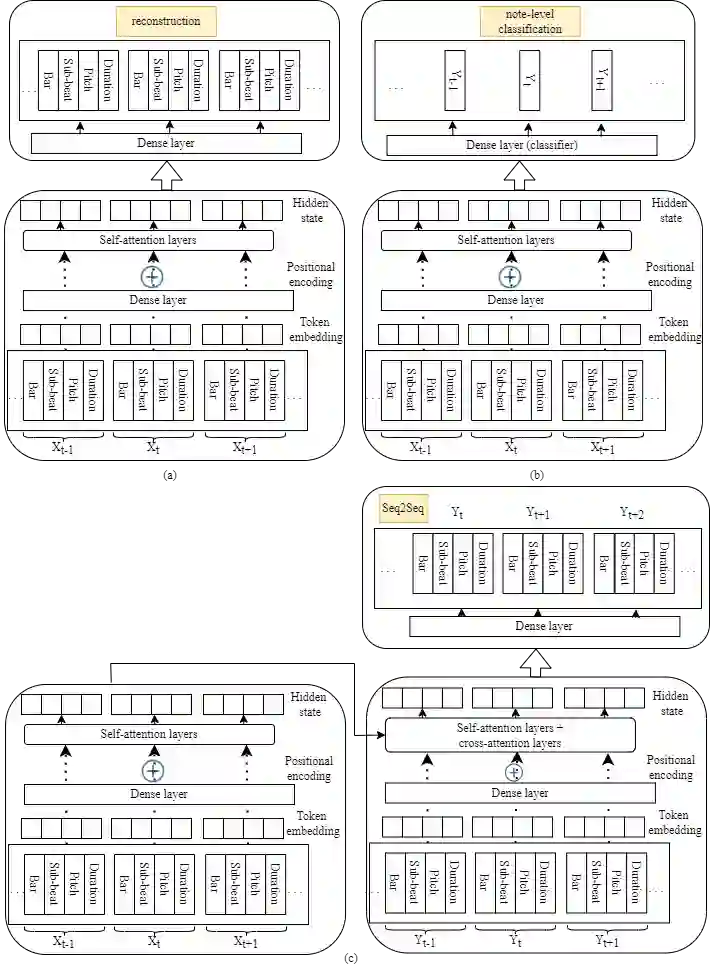
In this study, we present a novel automatic piano reduction method with semi-supervised machine learning. Piano reduction is an important music transformation process, which helps musicians and composers as a musical sketch for performances and analysis. The automation of such is a highly challenging research problem but could bring huge conveniences as manually doing a piano reduction takes a lot of time and effort. While supervised machine learning is often a useful tool for learning input-output mappings, it is difficult to obtain a large quantity of labelled data. We aim to solve this problem by utilizing semi-supervised learning, so that the abundant available data in classical music can be leveraged to perform the task with little or no labelling effort. In this regard, we formulate a two-step approach of music simplification followed by harmonization. We further propose and implement two possible solutions making use of an existing machine learning framework -- MidiBERT. We show that our solutions can output practical and realistic samples with an accurate reduction that needs only small adjustments in post-processing. Our study forms the groundwork for the use of semi-supervised learning in automatic piano reduction, where future researchers can take reference to produce more state-of-the-art results.
翻译:本研究提出了一种新颖的基于半监督机器学习的自动钢琴缩编方法。钢琴缩编是一种重要的音乐转换过程,可作为演奏和分析的音乐草图,为音乐家和作曲家提供帮助。该过程的自动化是一个极具挑战性的研究课题,但能带来巨大便利,因为人工进行钢琴缩编需要耗费大量时间和精力。虽然监督式机器学习通常是学习输入-输出映射的有效工具,但获取大量标注数据十分困难。我们旨在通过利用半监督学习来解决这一问题,从而能够利用古典音乐中丰富的可用数据,以极少或无需标注的方式完成该任务。为此,我们构建了一个包含音乐简化与和声重构的两步式方法框架。我们进一步提出并实现了两种基于现有机器学习框架——MidiBERT——的可行解决方案。实验表明,我们的解决方案能够生成实用且真实的输出样本,其缩编结果准确度高,仅需在后处理阶段进行微调即可使用。本研究为半监督学习在自动钢琴缩编中的应用奠定了基础,未来研究者可据此参考以产生更先进的研究成果。




相关内容




 微信扫码咨询专知VIP会员