

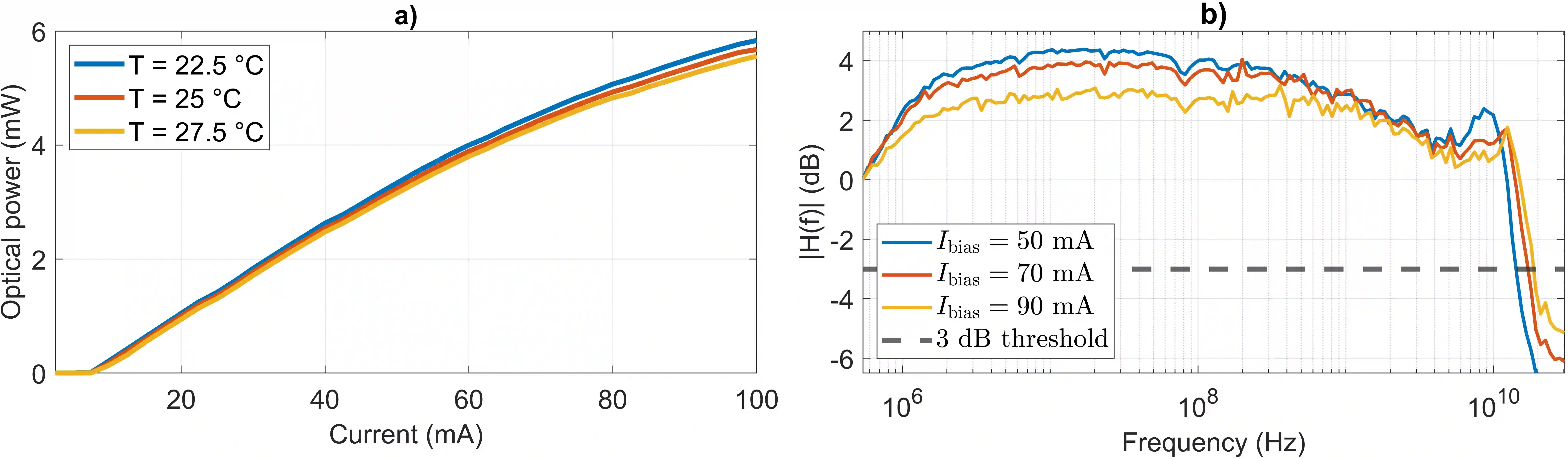
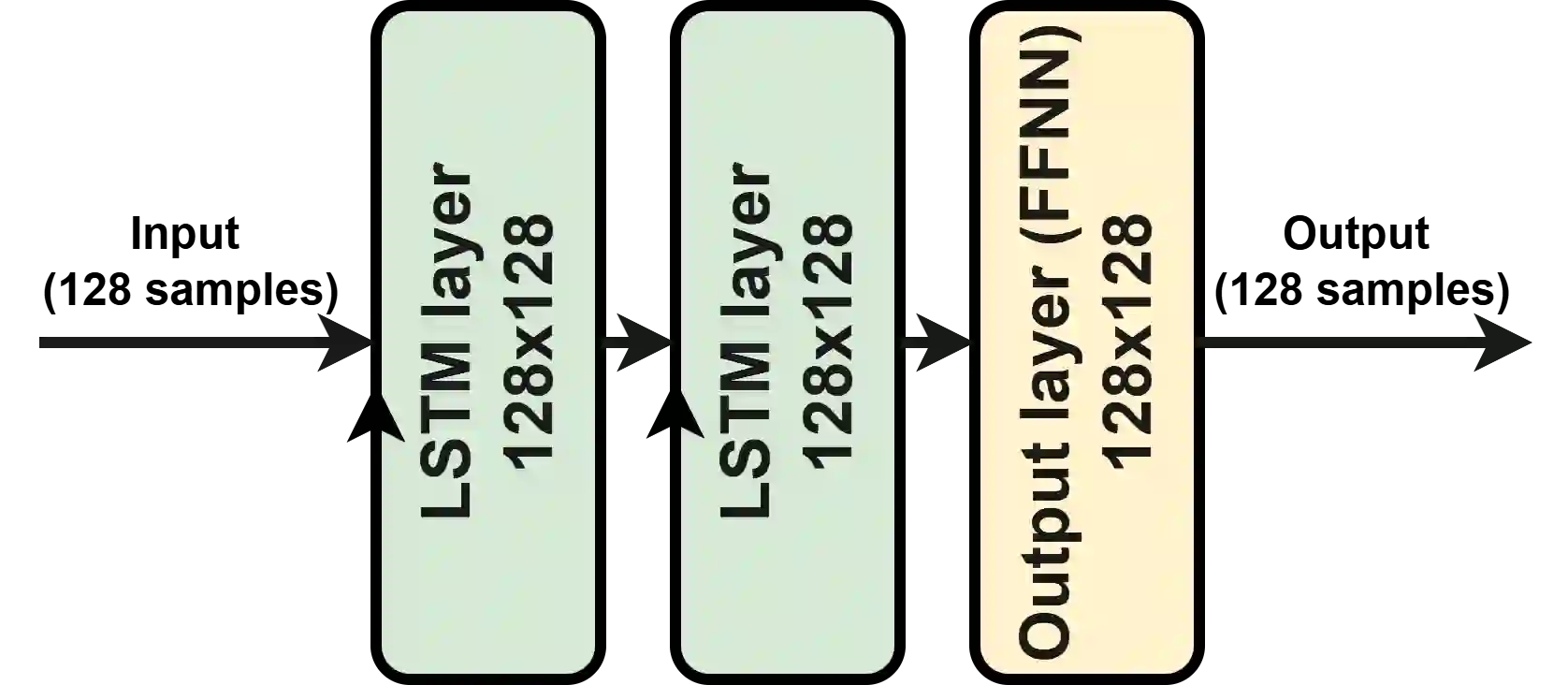
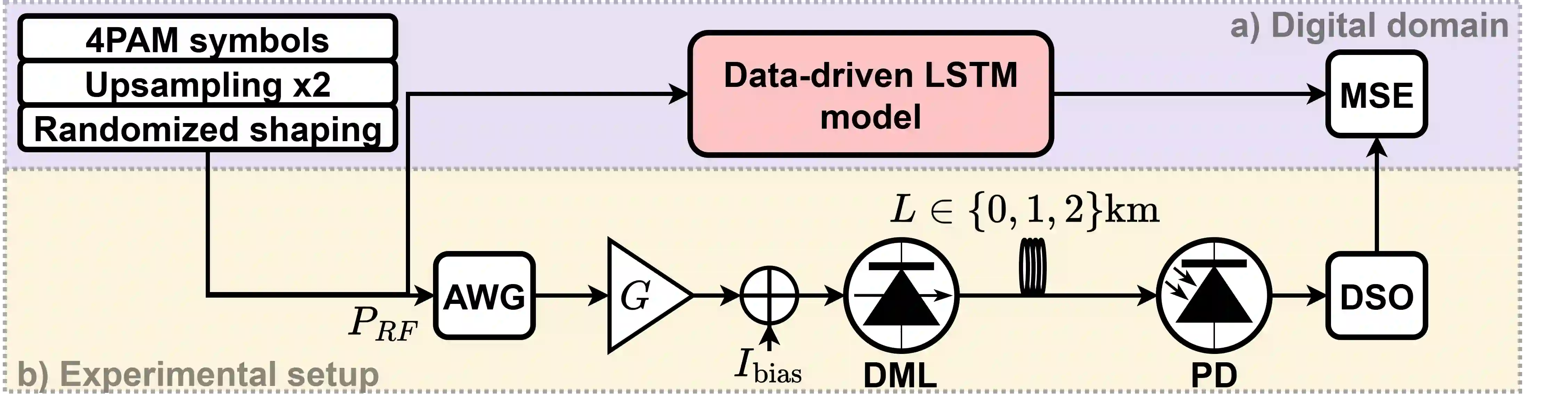
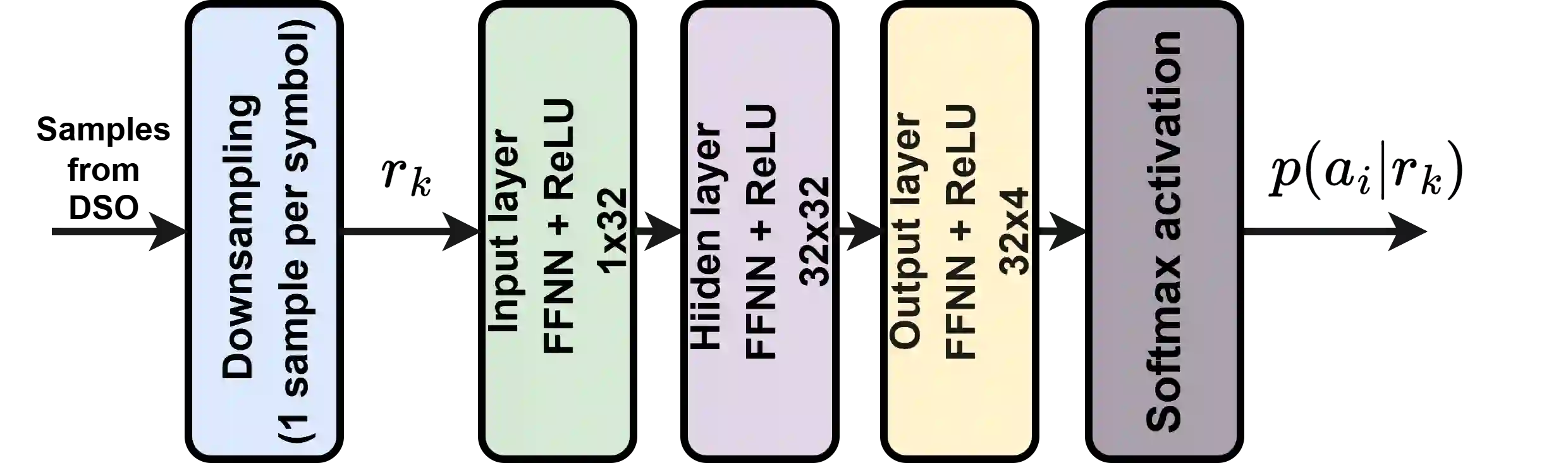
Directly modulated lasers (DMLs) are an attractive technology for short-reach intensity modulation and direct detection communication systems. However, their complex nonlinear dynamics make the modeling and optimization of DML-based systems challenging. In this paper, we study the end-to-end optimization of DML-based systems based on a data-driven surrogate model trained on experimental data. The end-to-end optimization includes the pulse shaping and equalizer filters, the bias current and the modulation radio-frequency (RF) power applied to the laser. The performance of the end-to-end optimization scheme is tested on the experimental setup and compared to 4 different benchmark schemes based on linear and nonlinear receiver-side equalization. The results show that the proposed end-to-end scheme is able to deliver better performance throughout the studied symbol rates and transmission distances while employing lower modulation RF power, fewer filter taps and utilizing a smaller signal bandwidth.
翻译:直接调制激光器(DML)是短距离强度调制与直接检测通信系统中一项极具吸引力的技术。然而,其复杂的非线性动力学特性使得基于DML的系统建模与优化面临挑战。本文基于实验数据训练的数据驱动代理模型,研究了基于DML系统的端到端优化。该端到端优化涵盖了脉冲成形与均衡器滤波器、激光器的偏置电流以及施加的调制射频(RF)功率。我们在实验装置上测试了该端到端优化方案的性能,并将其与基于线性和非线性接收端均衡的四种不同基准方案进行了比较。结果表明,所提出的端到端方案能够在所研究的符号速率和传输距离范围内提供更优的性能,同时采用更低的调制RF功率、更少的滤波器抽头并占用更小的信号带宽。





相关内容


 微信扫码咨询专知VIP会员