

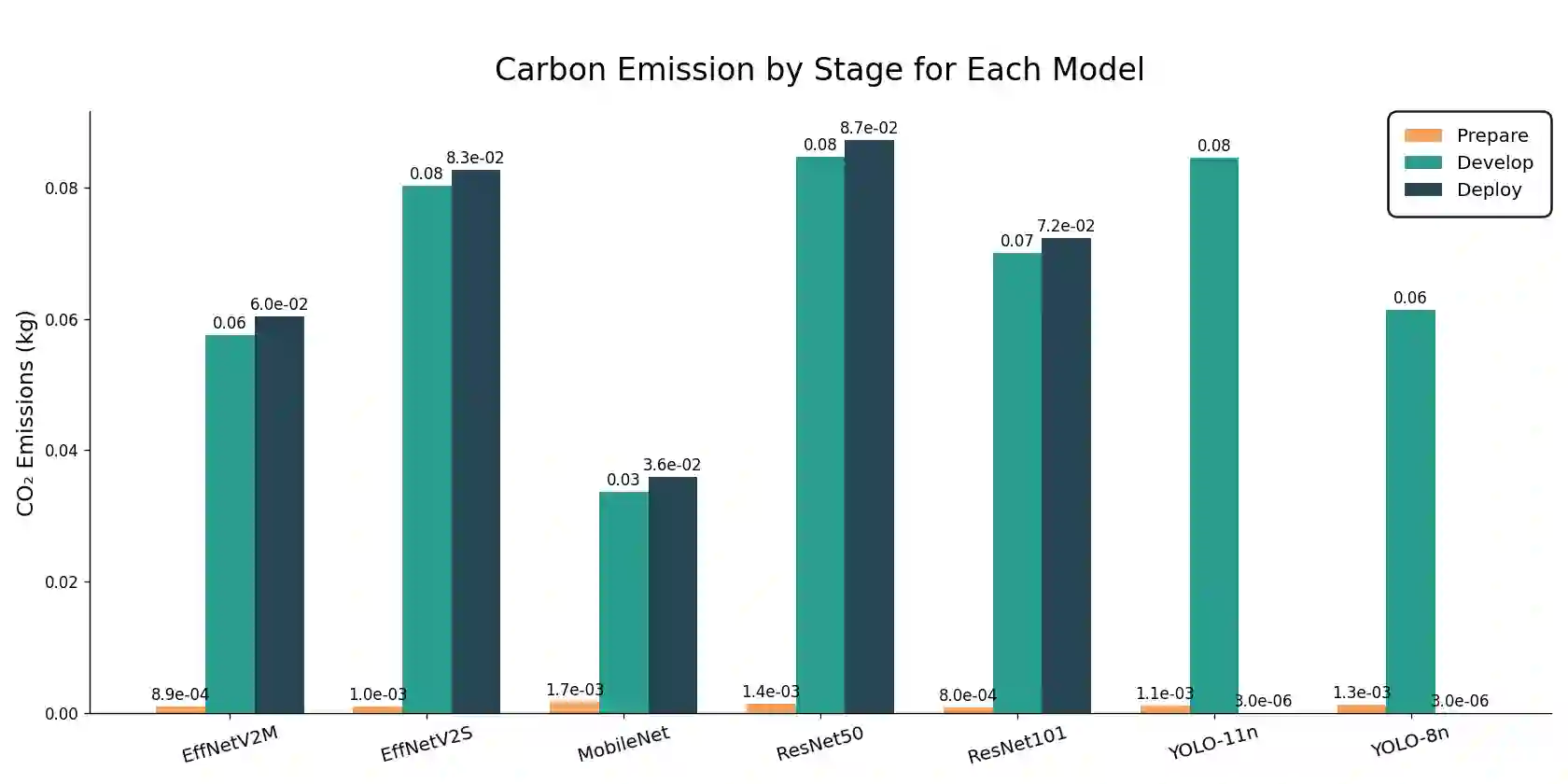
The rise of convenience packaging has led to generation of enormous waste, making efficient waste sorting crucial for sustainable waste management. To address this, we developed DWaste, a computer vision-powered platform designed for real-time waste sorting on resource-constrained smartphones and edge devices, including offline functionality. We benchmarked various image classification models (EfficientNetV2S/M, ResNet50/101, MobileNet) and object detection (YOLOv8n, YOLOv11n) including our purposed YOLOv8n-CBAM model using our annotated dataset designed for recycling. We found a clear trade-off between accuracy and resource consumption: the best classifier, EfficientNetV2S, achieved high accuracy(~ 96%) but suffered from high latency (~ 0.22s) and elevated carbon emissions. In contrast, lightweight object detection models delivered strong performance (up to 80% mAP) with ultra-fast inference (~ 0.03s) and significantly smaller model sizes (< 7MB ), making them ideal for real-time, low-power use. Model quantization further maximized efficiency, substantially reducing model size and VRAM usage by up to 75%. Our work demonstrates the successful implementation of "Greener AI" models to support real-time, sustainable waste sorting on edge devices.
翻译:便捷包装的普及导致大量废弃物产生,使得高效的废物分类成为可持续废弃物管理的关键。为此,我们开发了DWaste——一个基于计算机视觉的平台,专为资源受限的智能手机和边缘设备(包括离线功能)实现实时废物分类而设计。我们使用专为回收场景标注的数据集,对多种图像分类模型(EfficientNetV2S/M、ResNet50/101、MobileNet)和目标检测模型(YOLOv8n、YOLOv11n)进行了基准测试,其中包括我们提出的YOLOv8n-CBAM模型。研究发现准确性与资源消耗之间存在明显权衡:最佳分类器EfficientNetV2S实现了高准确率(约96%),但存在高延迟(约0.22秒)和较高碳排放的问题。相比之下,轻量级目标检测模型在保持优异性能(最高80% mAP)的同时,具备超快推理速度(约0.03秒)和显著更小的模型体积(<7MB),非常适合实时低功耗场景。模型量化进一步提升了效率,模型体积和显存使用量最高可减少75%。本研究证明了“绿色人工智能”模型在边缘设备上实现实时可持续废物分类的成功应用。





相关内容




 微信扫码咨询专知VIP会员