

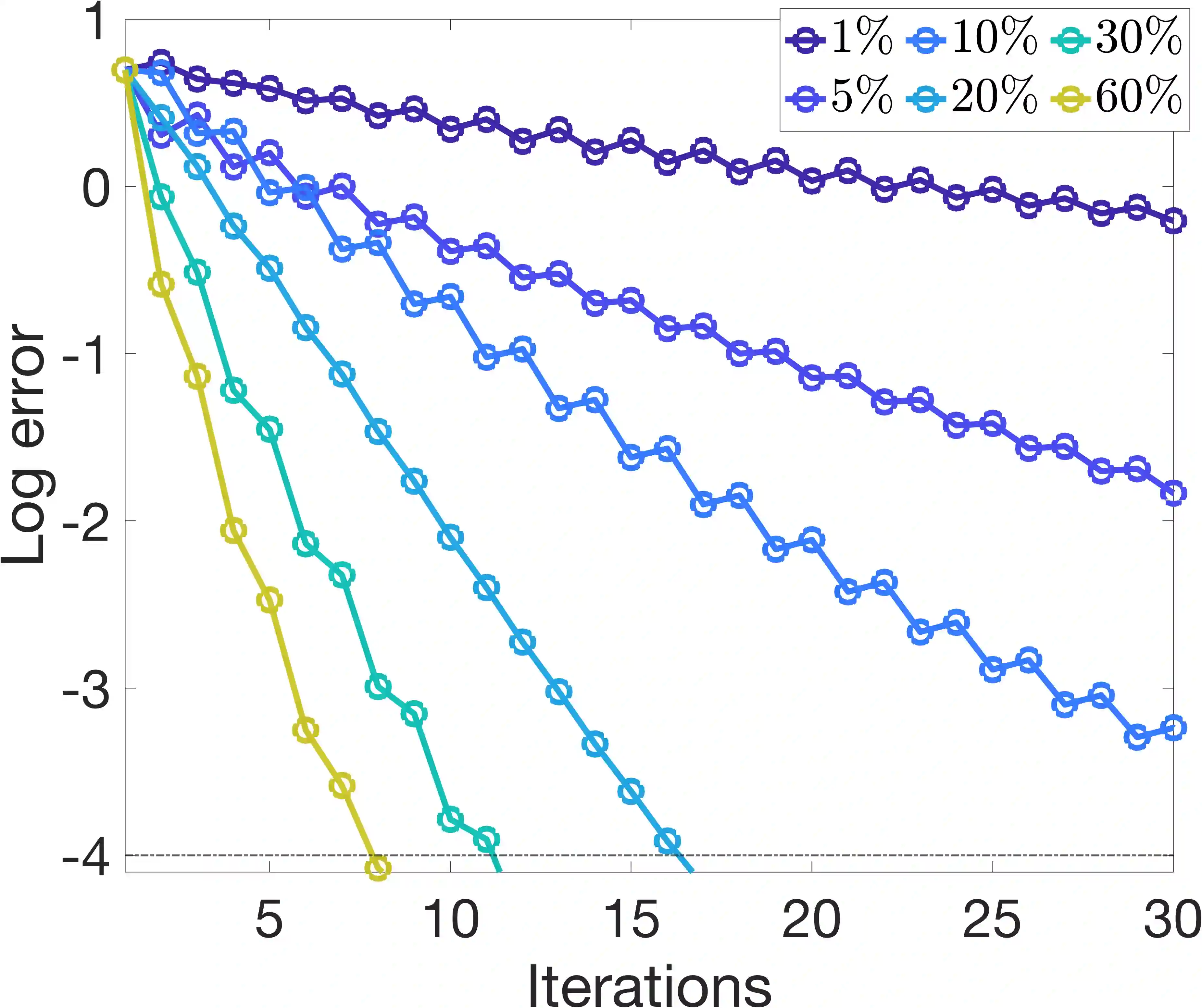
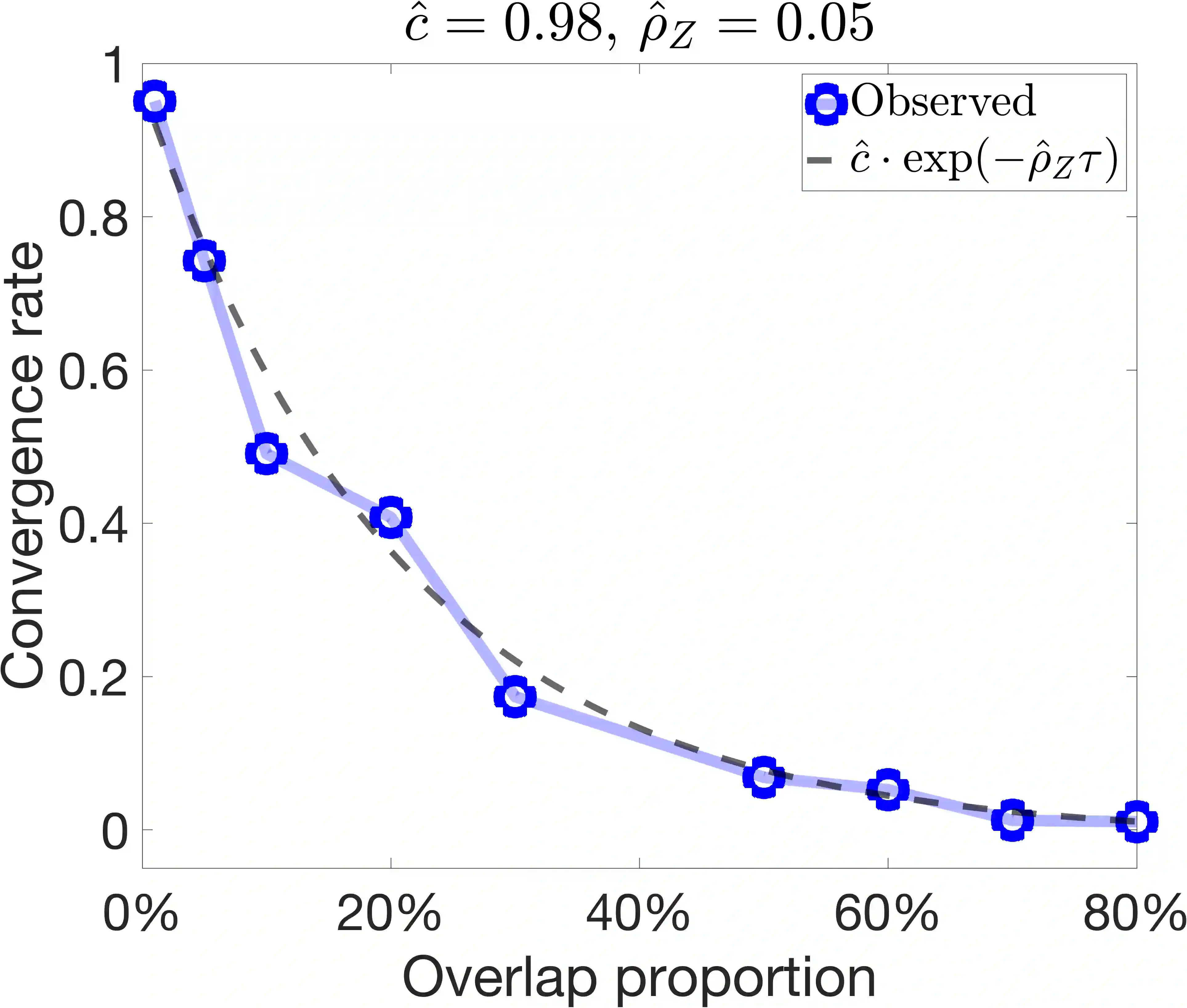
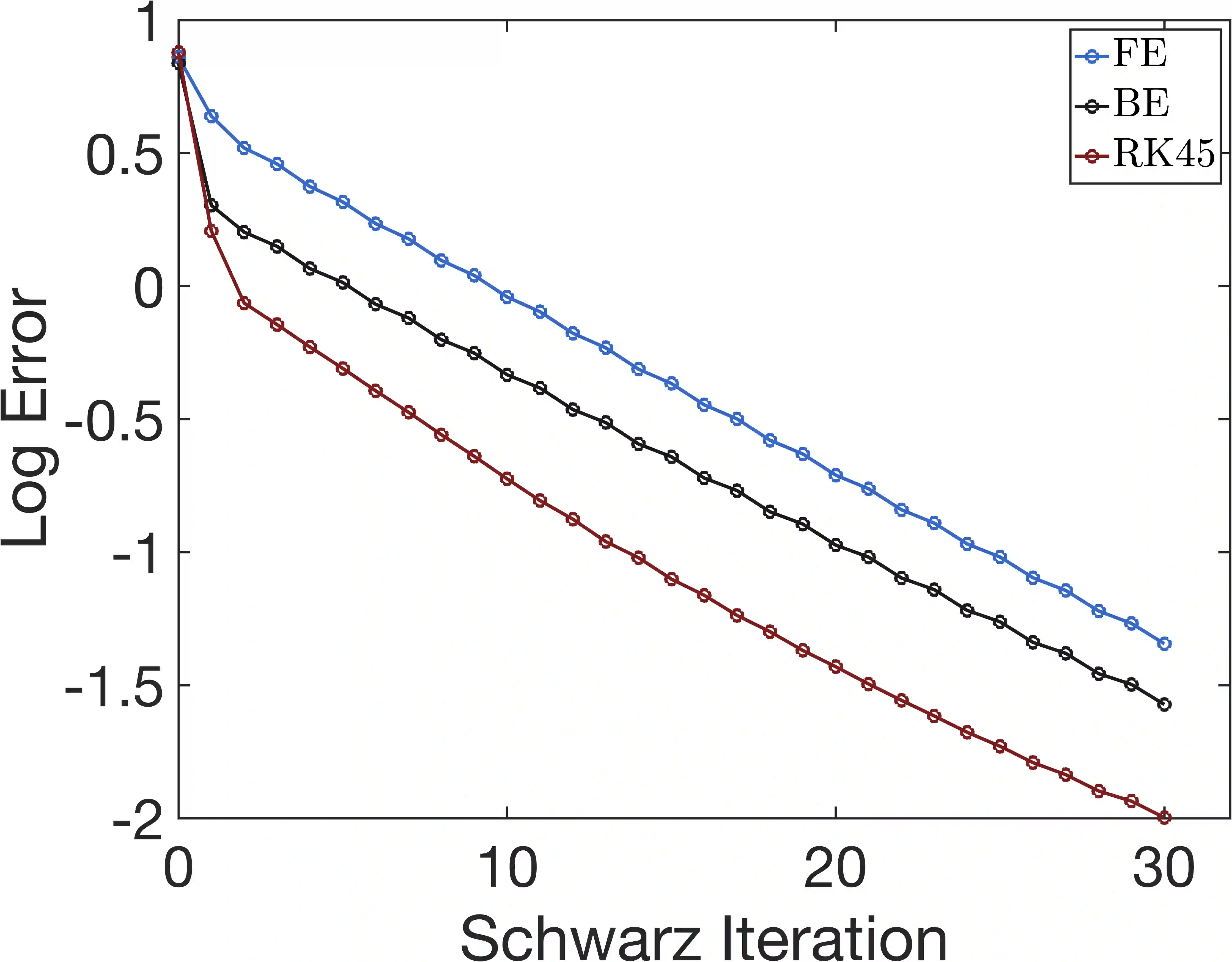
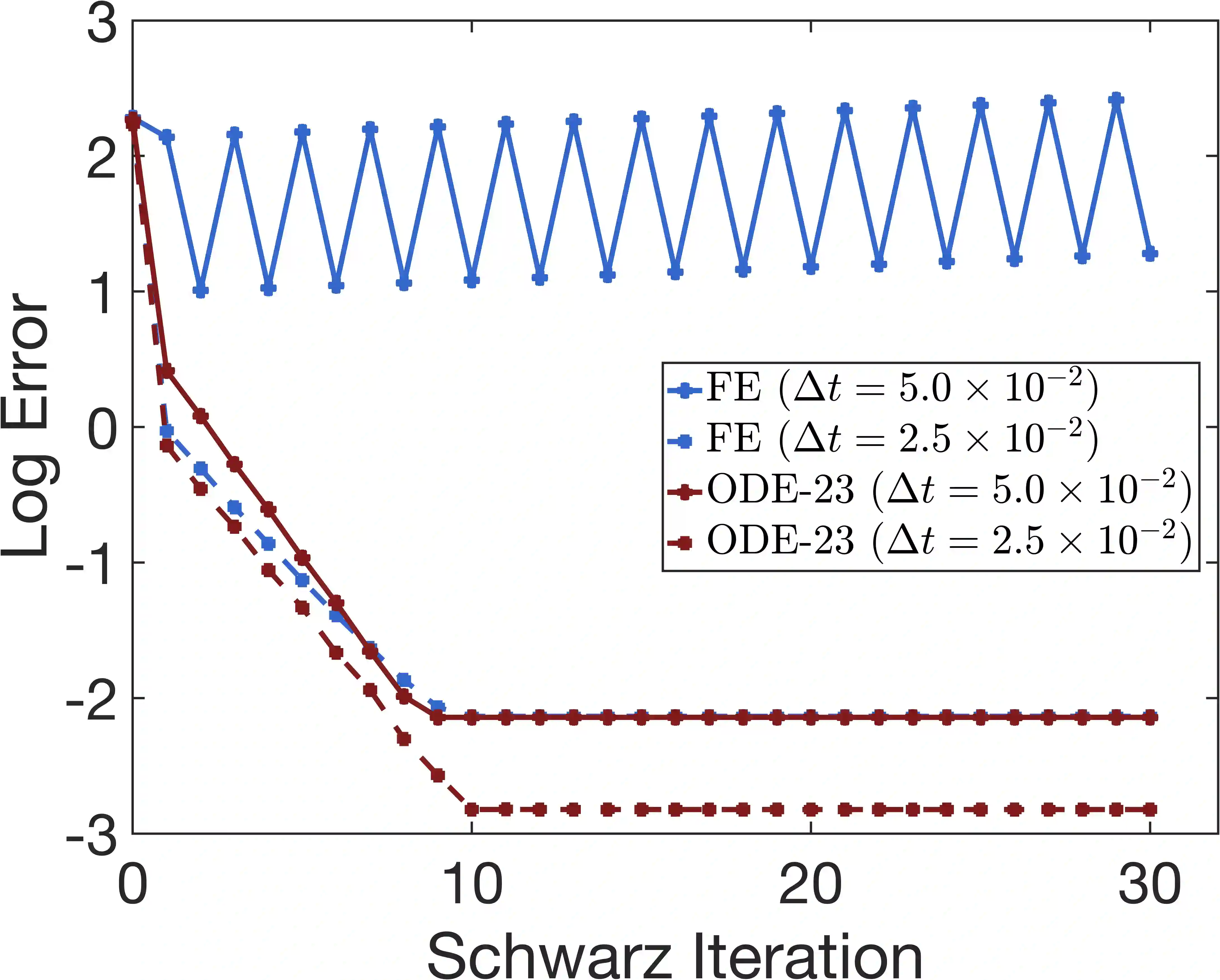
We present an optimize-then-discretize framework for solving linear-quadratic optimal control problems (OCP) governed by time-inhomogeneous ordinary differential equations (ODEs). Our method employs a modified overlapping Schwarz decomposition based on the Pontryagin Minimum Principle, partitioning the temporal domain into overlapping intervals and independently solving Hamiltonian systems in continuous time. We demonstrate that the convergence is ensured by appropriately updating the boundary conditions of the individual Hamiltonian dynamics. The cornerstone of our analysis is to prove that the exponential decay of sensitivity (EDS) exhibited in discrete-time OCPs carries over to the continuous-time setting. Unlike the discretize-then-optimize approach, our method can flexibly incorporate different numerical integration methods for solving the resulting Hamiltonian two-point boundary-value subproblems, including adaptive-time integrators. A numerical experiment on a linear-quadratic OCP illustrates the practicality of our approach in broad scientific applications.
翻译:本文提出了一种优化-离散化框架,用于求解由非齐次常微分方程(ODE)控制的线性二次最优控制问题(OCP)。该方法基于庞特里亚金最小值原理,采用改进的重叠Schwarz分解策略,将时间域划分为重叠区间,并在连续时间内独立求解哈密顿系统。我们证明了通过适当更新各哈密顿动力学的边界条件,可以确保算法的收敛性。本分析的核心在于证明离散时间OCP中表现出的灵敏度指数衰减(EDS)性质在连续时间设定下依然成立。与先离散化后优化的方法不同,本方法能够灵活地采用不同的数值积分方法(包括自适应时间积分器)来求解所得的哈密顿两点边值子问题。针对一个线性二次OCP的数值实验,展示了本方法在广泛科学应用中的实用性。




相关内容

Source: Apple - iOS 8



 微信扫码咨询专知VIP会员