

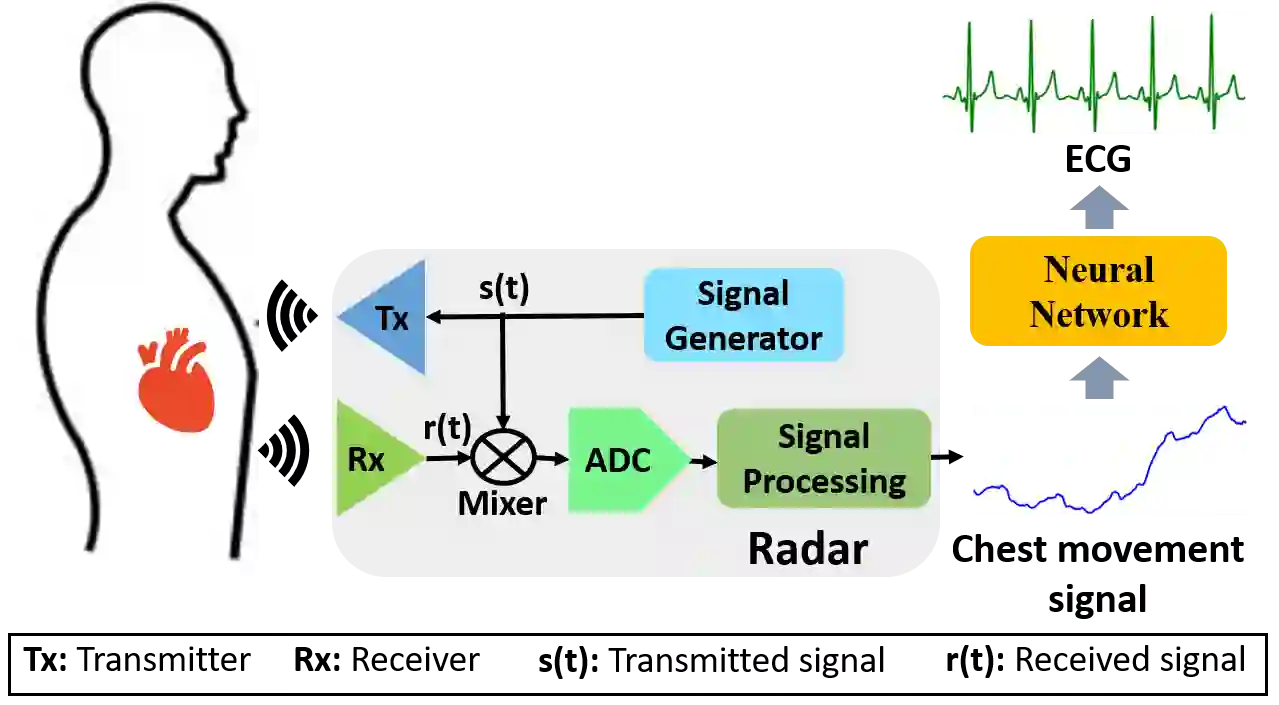
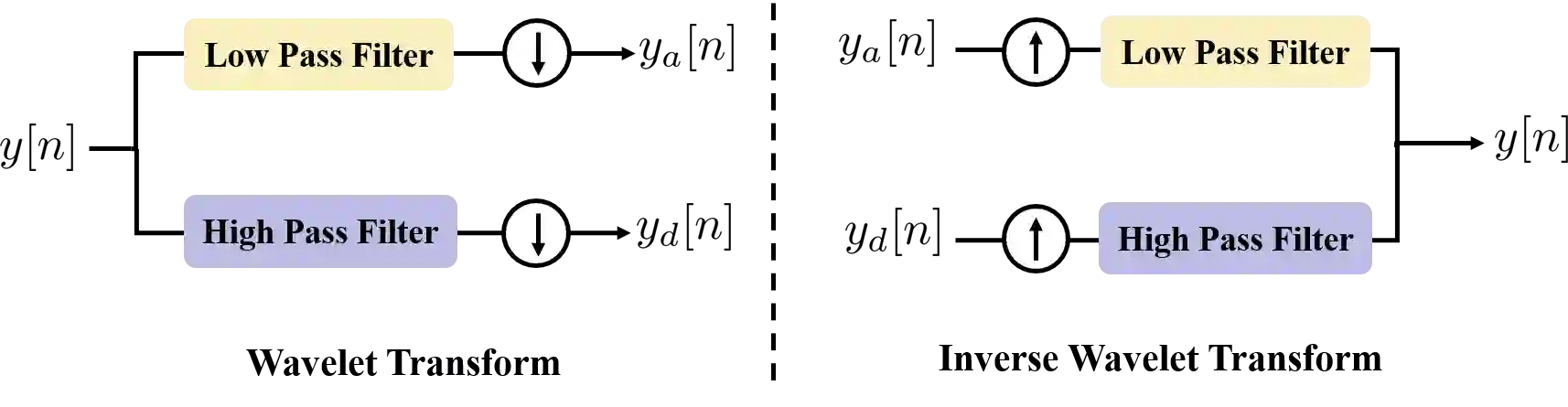
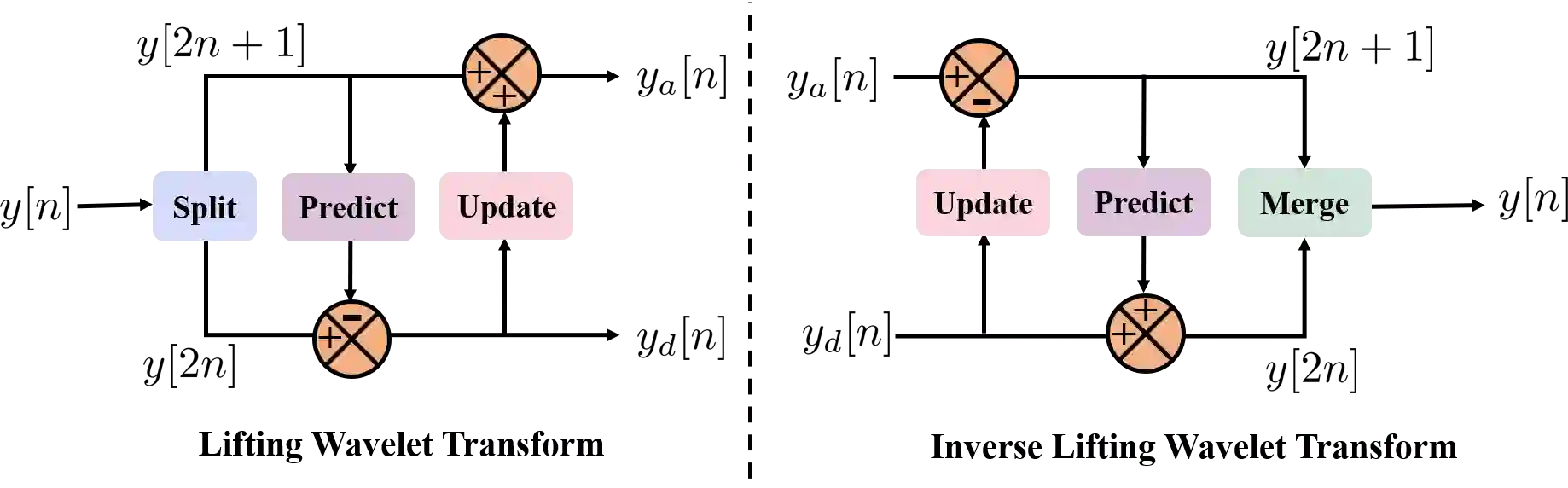
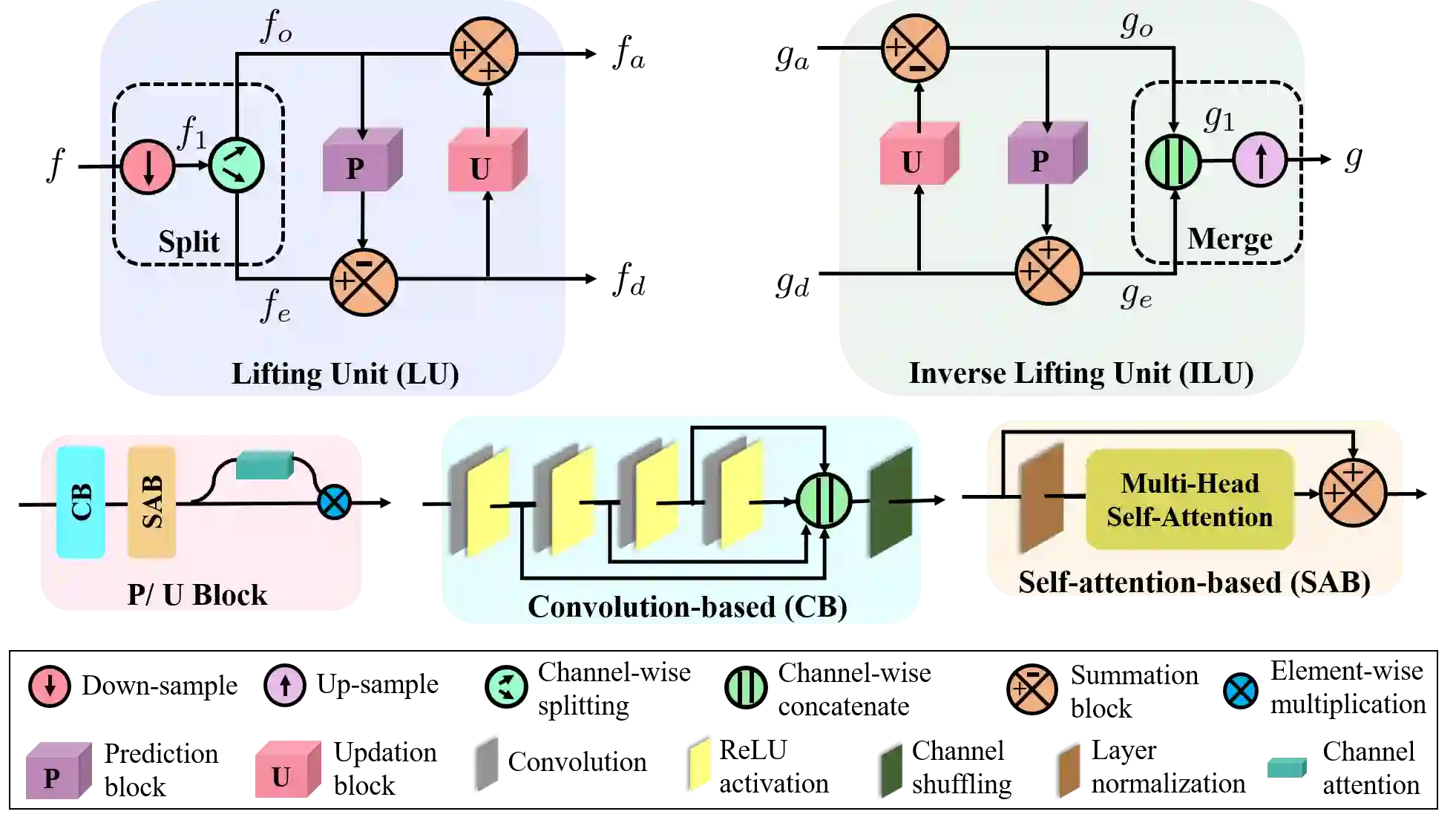
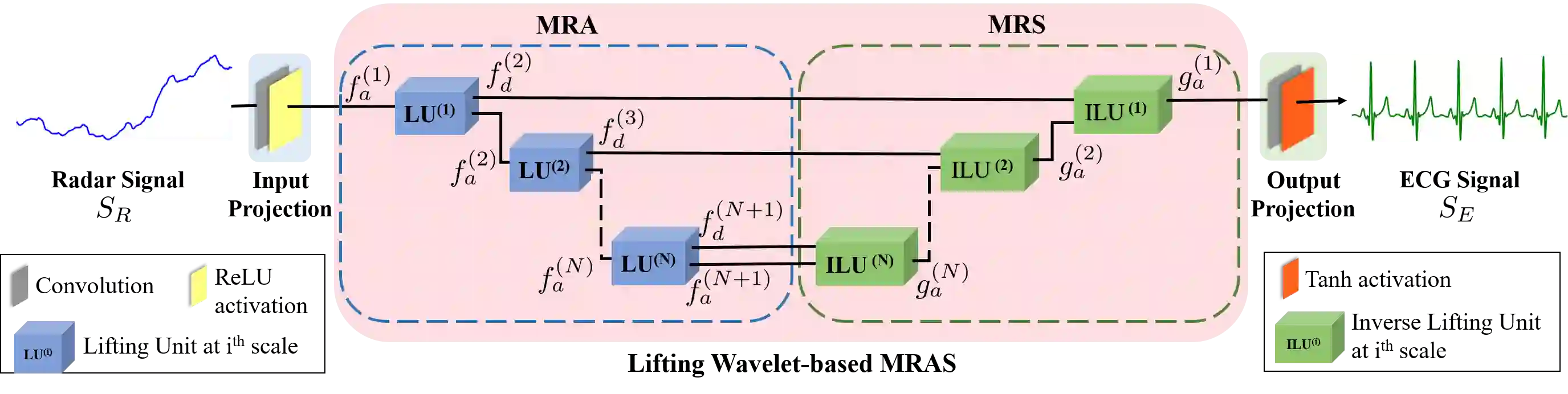
Non-contact electrocardiogram (ECG) reconstruction from radar signals offers a promising approach for unobtrusive cardiac monitoring. We present LifWavNet, a lifting wavelet network based on a multi-resolution analysis and synthesis (MRAS) model for radar-to-ECG reconstruction. Unlike prior models that use fixed wavelet approaches, LifWavNet employs learnable lifting wavelets with lifting and inverse lifting units to adaptively capture radar signal features and synthesize physiologically meaningful ECG waveforms. To improve reconstruction fidelity, we introduce a multi-resolution short-time Fourier transform (STFT) loss, that enforces consistency with the ground-truth ECG in both temporal and spectral domains. Evaluations on two public datasets demonstrate that LifWavNet outperforms state-of-the-art methods in ECG reconstruction and downstream vital sign estimation (heart rate and heart rate variability). Furthermore, intermediate feature visualization highlights the interpretability of multi-resolution decomposition and synthesis in radar-to-ECG reconstruction. These results establish LifWavNet as a robust framework for radar-based non-contact ECG measurement.
翻译:基于雷达信号的非接触式心电图(ECG)重建为无干扰心脏监测提供了一种前景广阔的方法。本文提出LifWavNet,这是一种基于多分辨率分析与合成(MRAS)模型的提升小波网络,用于实现雷达信号到心电图的重建。与以往采用固定小波方法的模型不同,LifWavNet利用可学习的提升小波,通过提升单元和逆提升单元自适应地捕捉雷达信号特征,并合成具有生理意义的心电图波形。为提高重建保真度,我们引入了多分辨率短时傅里叶变换(STFT)损失函数,该损失在时域和频域均强制重建信号与真实心电图保持一致。在两个公开数据集上的评估表明,LifWavNet在心电图重建及下游生命体征估计(心率和心率变异性)方面均优于现有先进方法。此外,中间特征的可视化凸显了多分辨率分解与合成在雷达到心电图重建过程中的可解释性。这些结果确立了LifWavNet作为基于雷达的非接触式心电图测量的稳健框架。




相关内容




 微信扫码咨询专知VIP会员