

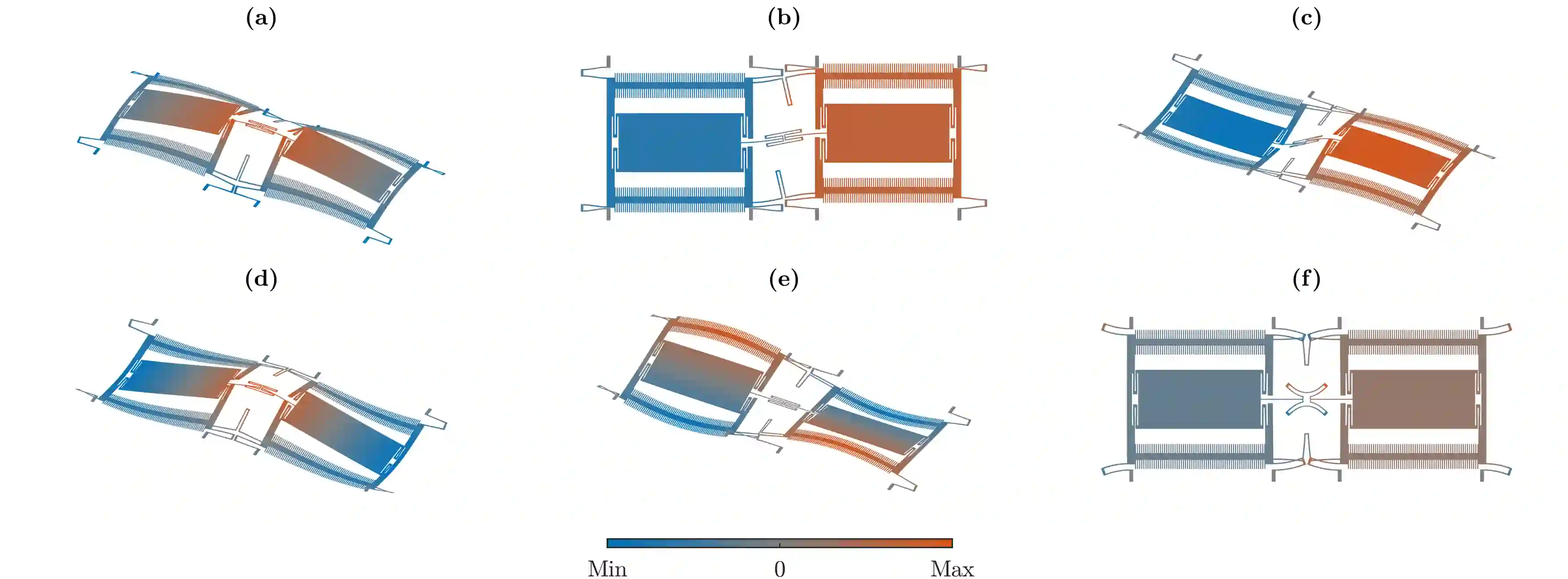
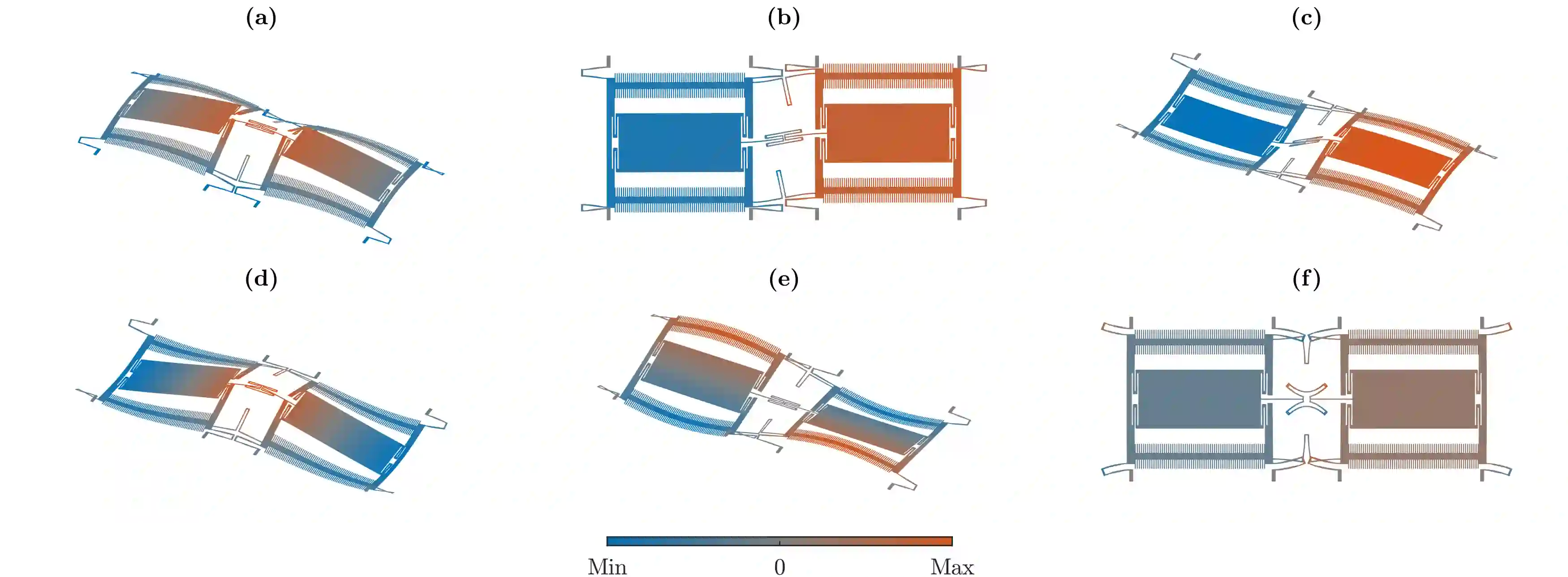
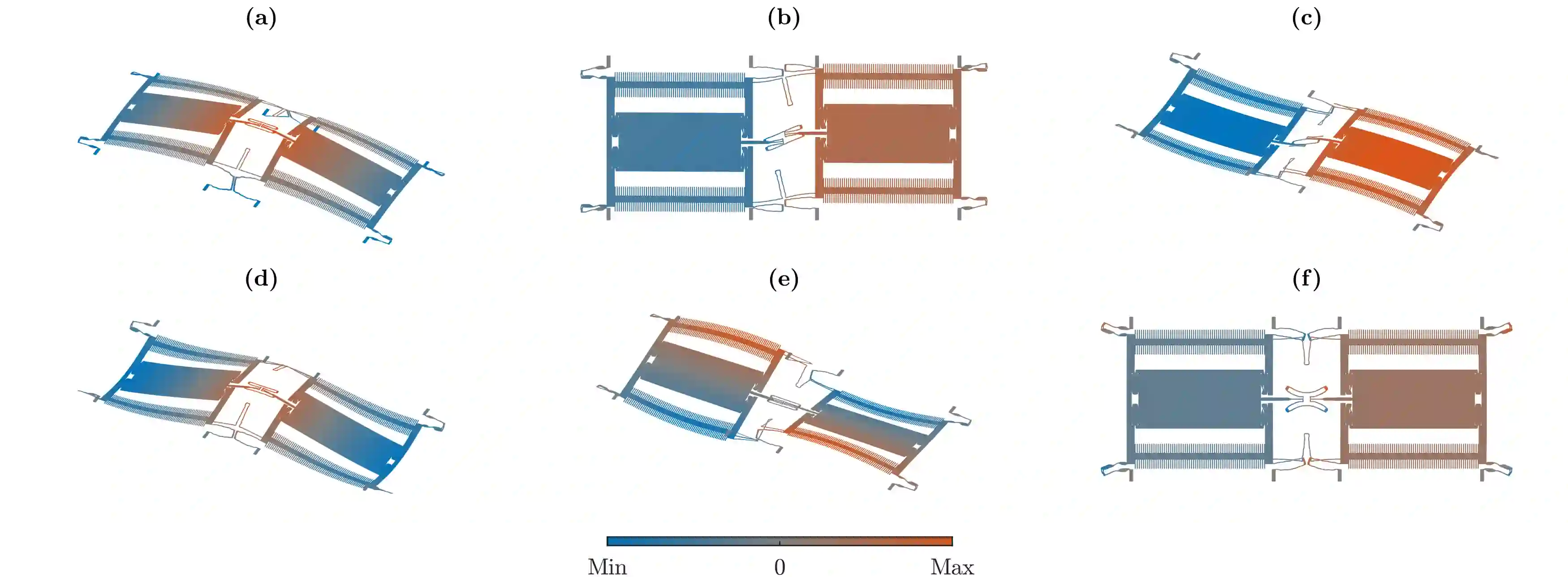
Micro- and nanoelectromechanical system (MEMS and NEMS) resonators can exhibit rich nonlinear dynamics as they are often operated at large amplitudes with high quality factors and possess a high mode density with a variety of nonlinear modal couplings. Their impact is strongly influenced by internal resonance conditions and by the strength of the modal coupling coefficients. On one hand, strong nonlinear couplings are of academic interest and promise novel device concepts. On the other hand, however, they have the potential to disturb the linear system behavior on which industrial devices such as gyroscopes and micro mirrors are based on. In either case, being able to optimize the coupling coefficients by design is certainly beneficial. A main source of nonlinear modal couplings are geometric nonlinearities. In this work, we apply node-based shape optimization to tune the geometrically nonlinear 3-wave coupling coefficients of a MEMS gyroscope. We demonstrate that individual coupling coefficients can be tuned over several orders of magnitude by shape optimization, while satisfying typical constraints on manufacturability and operability of the devices. The optimized designs contain unintuitive geometrical features far away from any solution an experienced human MEMS or NEMS designer could have thought of. Thus, this work demonstrates the power of shape optimization for tailoring the complex nonlinear dynamic properties of MEMS and NEMS resonators.
翻译:微机电与纳机电系统(MEMS与NEMS)谐振器通常在大振幅、高Q值下工作,且具有高模态密度及多种非线性模态耦合,因此可展现出丰富的非线性动力学行为。其影响在很大程度上受内共振条件及模态耦合系数强度的制约。一方面,强非线性耦合具有学术研究价值,并有望催生新颖的器件概念;另一方面,它们也可能干扰陀螺仪和微镜等工业器件所依赖的线性系统行为。无论在哪种情况下,能够通过设计优化耦合系数都无疑是有益的。几何非线性是产生非线性模态耦合的主要来源之一。本研究采用基于节点的形状优化方法,对一款MEMS陀螺仪的几何非线性三波耦合系数进行调控。结果表明,通过形状优化可在满足器件可制造性与可操作性典型约束的同时,将特定耦合系数调节数个数量级。优化后的设计包含反直觉的几何特征,这些特征远超出任何经验丰富的MEMS或NEMS设计人员所能设想的解决方案。因此,本工作证明了形状优化在定制MEMS与NEMS谐振器复杂非线性动态特性方面的强大能力。




相关内容



 微信扫码咨询专知VIP会员