

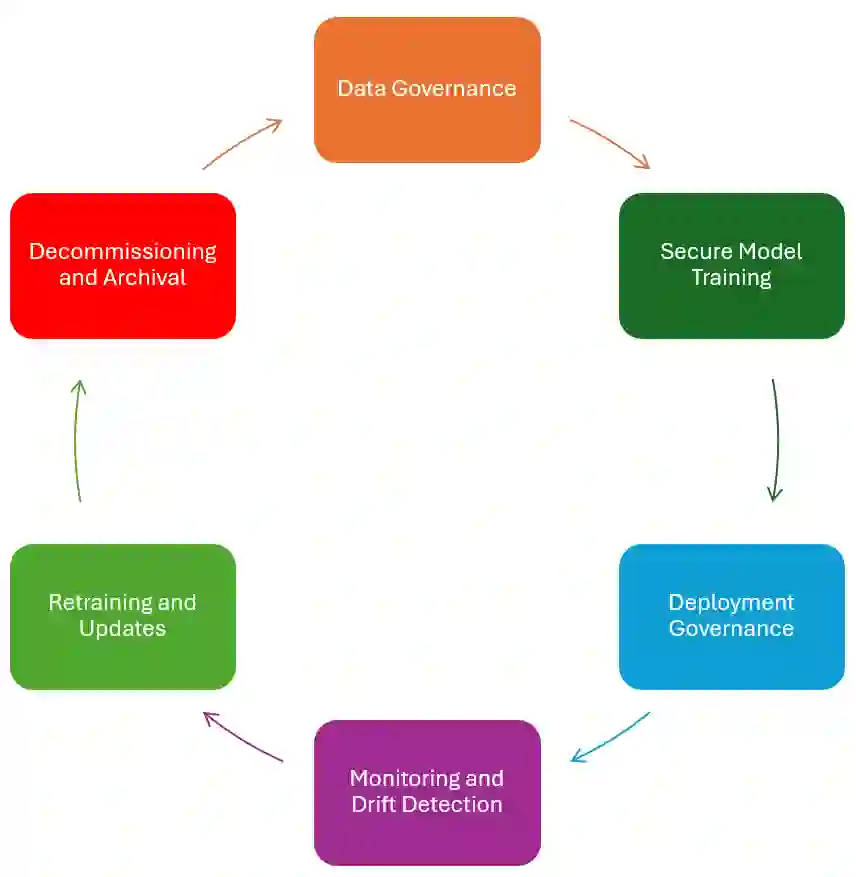
Natural Language Processing (NLP) systems are increasingly used in sensitive domains such as healthcare, finance, and government, where they handle large volumes of personal and regulated data. However, these systems introduce distinct risks related to security, privacy, and regulatory compliance that are not fully addressed by existing AI governance frameworks. This paper introduces the Secure and Compliant NLP Lifecycle Management Framework (SC-NLP-LMF), a comprehensive six-phase model designed to ensure the secure operation of NLP systems from development to retirement. The framework, developed through a systematic PRISMA-based review of 45 peer-reviewed and regulatory sources, aligns with leading standards, including NIST AI RMF, ISO/IEC 42001:2023, the EU AI Act, and MITRE ATLAS. It integrates established methods for bias detection, privacy protection (differential privacy, federated learning), secure deployment, explainability, and secure model decommissioning. A healthcare case study illustrates how SC-NLP-LMF detects emerging terminology drift (e.g., COVID-related language) and guides compliant model updates. The framework offers organizations a practical, lifecycle-wide structure for developing, deploying, and maintaining secure and accountable NLP systems in high-risk environments.
翻译:自然语言处理(NLP)系统日益广泛地应用于医疗保健、金融和政府等敏感领域,处理大量个人及受监管数据。然而,这些系统引入了与安全性、隐私性和监管合规性相关的独特风险,现有的人工智能治理框架未能完全应对。本文提出安全合规的NLP生命周期管理框架(SC-NLP-LMF),这是一个全面的六阶段模型,旨在确保NLP系统从开发到退役的安全运行。该框架通过对45项同行评审及监管文献进行系统性PRISMA综述而制定,符合包括NIST AI RMF、ISO/IEC 42001:2023、欧盟《人工智能法案》及MITRE ATLAS在内的领先标准。它整合了偏见检测、隐私保护(差分隐私、联邦学习)、安全部署、可解释性及安全模型退役的成熟方法。一项医疗保健案例研究展示了SC-NLP-LMF如何检测新兴术语漂移(如与COVID相关的语言)并指导合规的模型更新。该框架为组织在高风险环境中开发、部署和维护安全可靠的自然语言处理系统提供了一个贯穿整个生命周期的实用架构。




相关内容




 微信扫码咨询专知VIP会员