

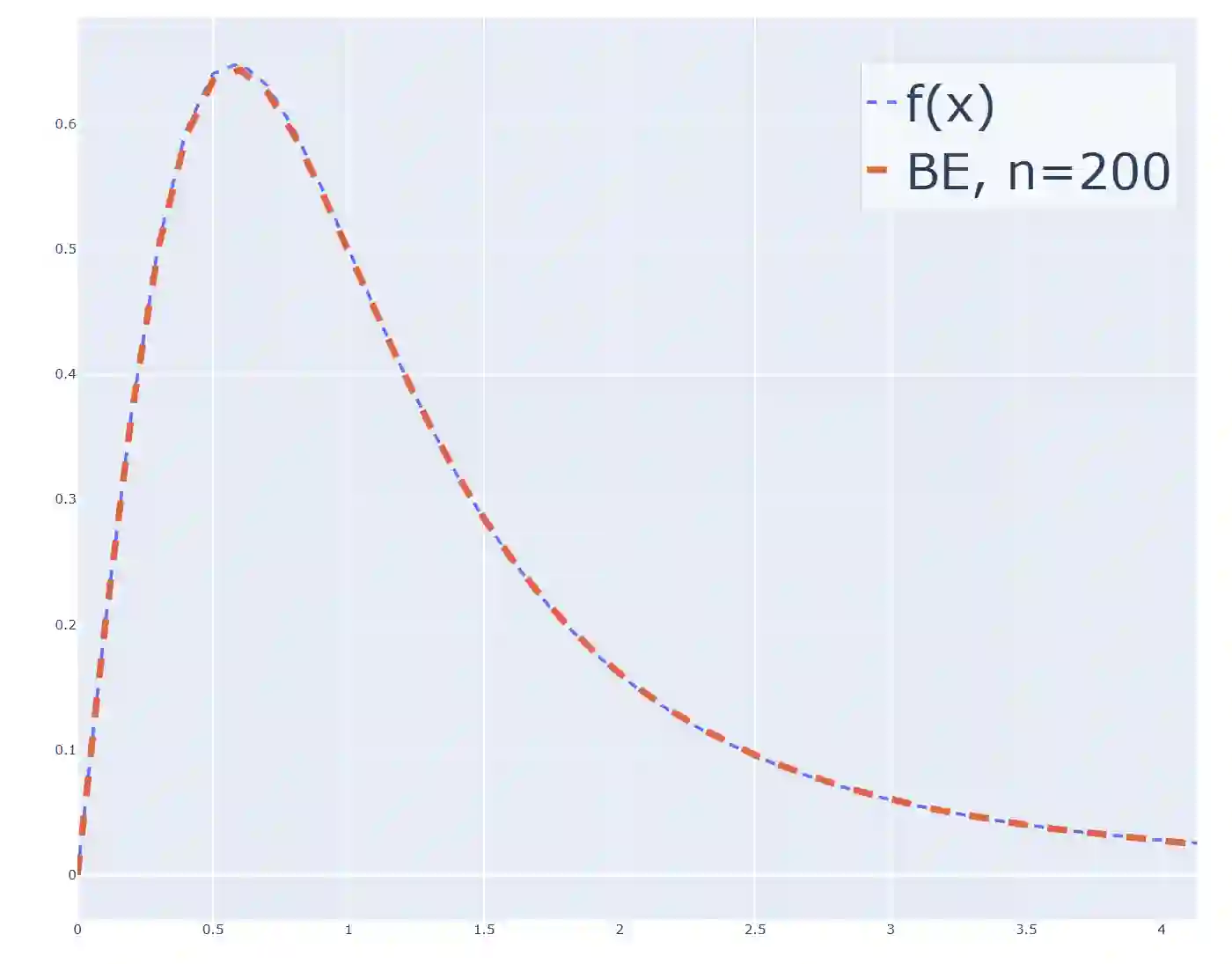
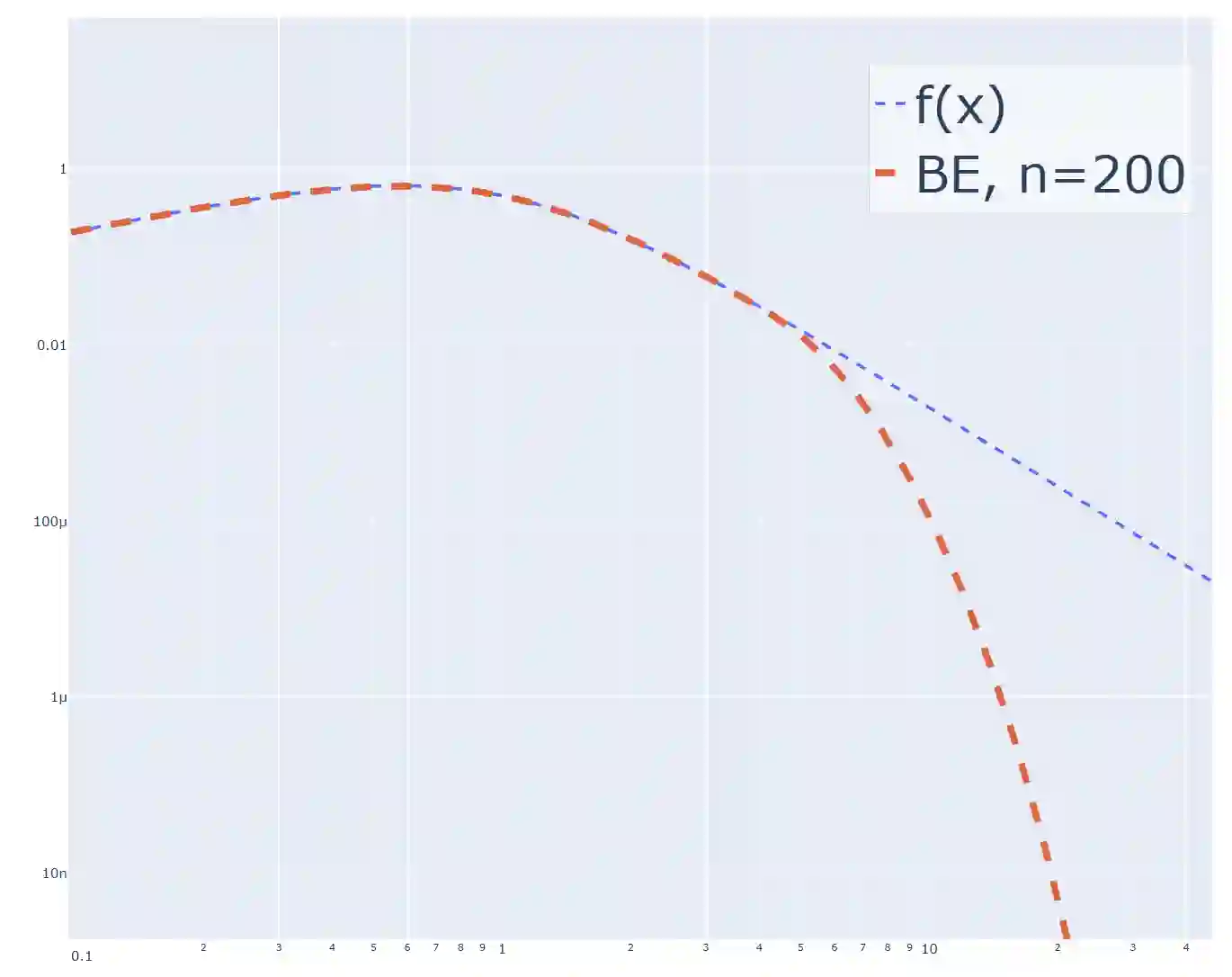
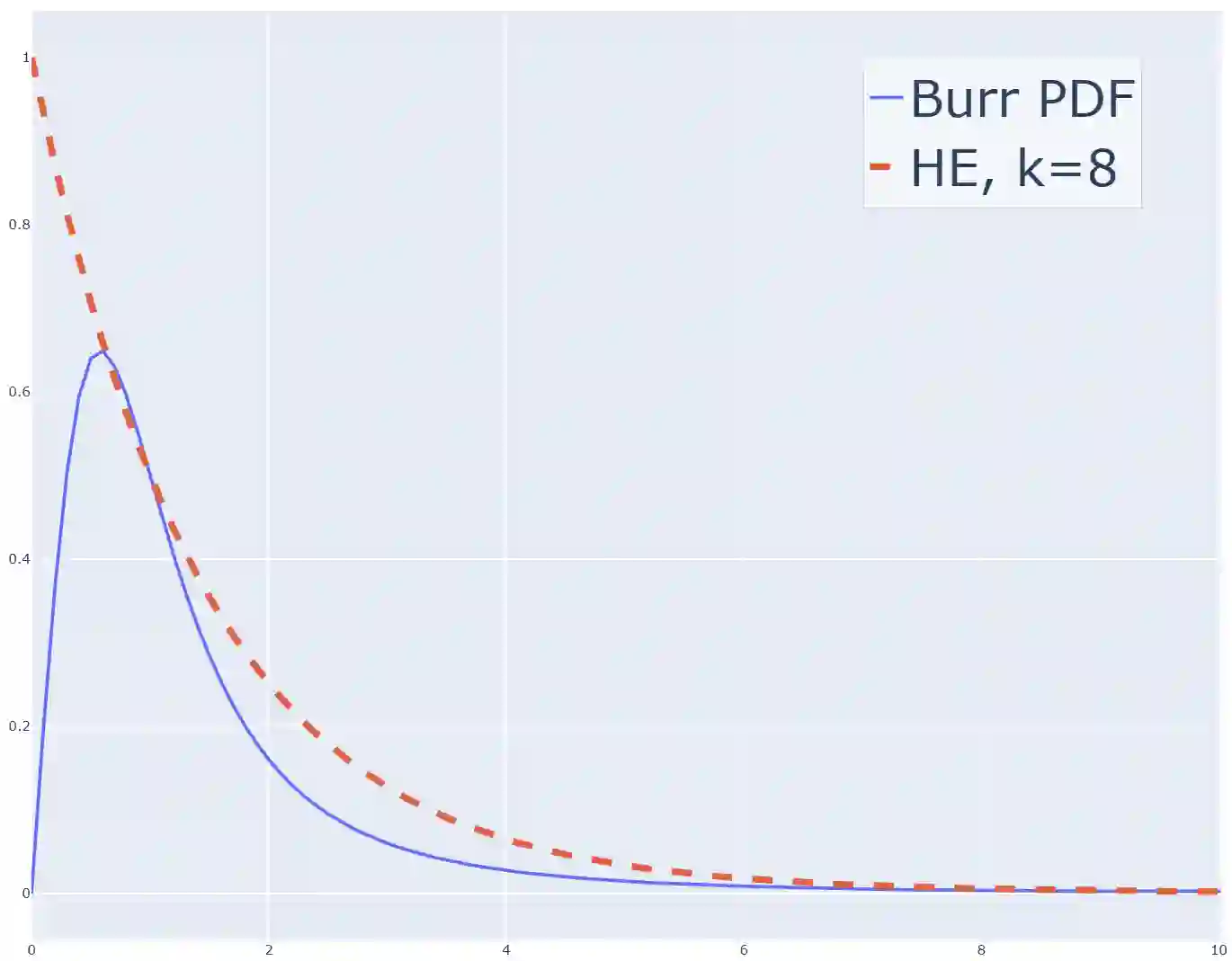
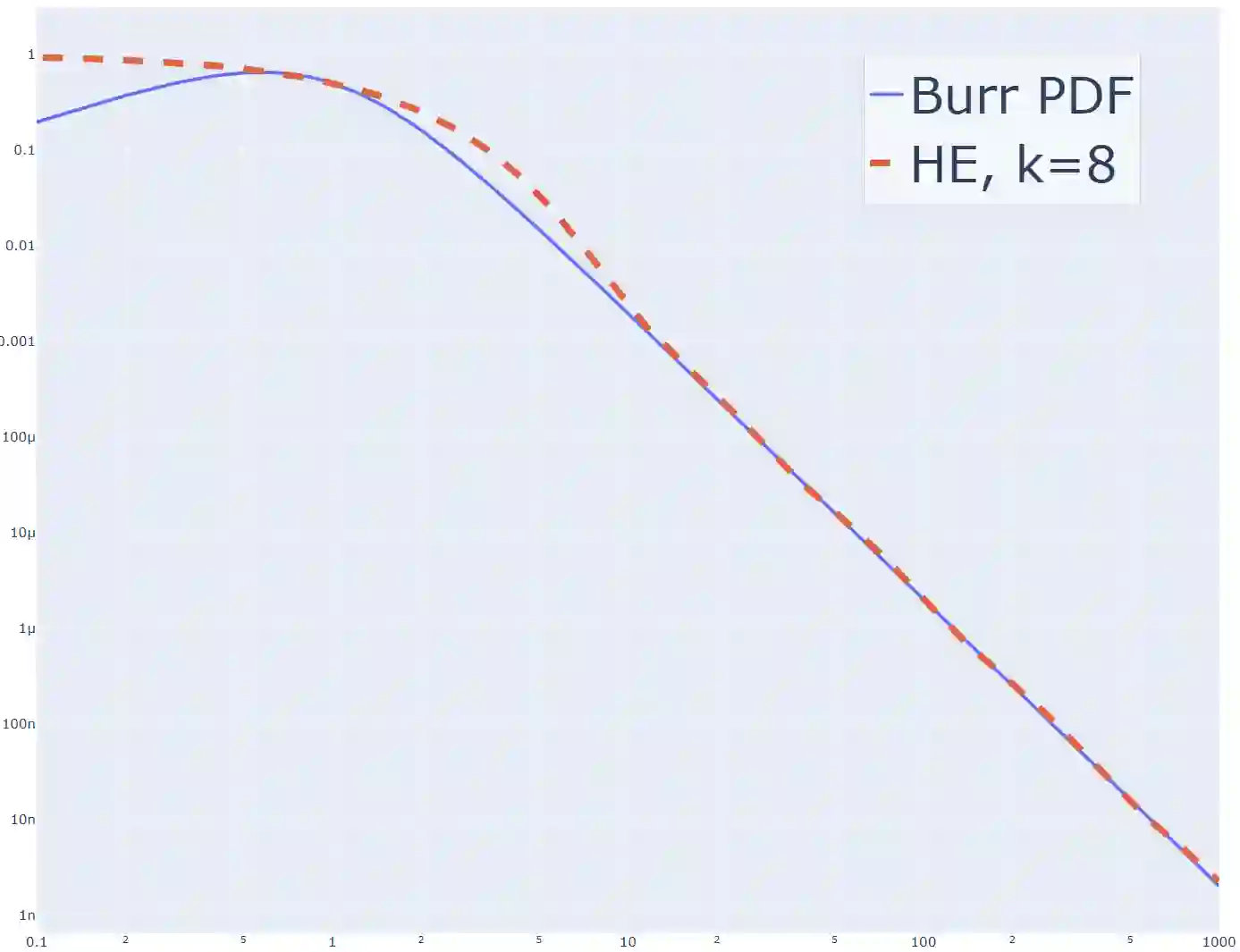
Heavy-tailed distributions, prevalent in a lot of real-world applications such as finance, telecommunications, queuing theory, and natural language processing, are challenging to model accurately owing to their slow tail decay. Bernstein phase-type (BPH) distributions, through their analytical tractability and good approximations in the non-tail region, can present a good solution, but they suffer from an inability to reproduce these heavy-tailed behaviors exactly, thus leading to inadequate performance in important tail areas. On the contrary, while highly adaptable to heavy-tailed distributions, hyperexponential (HE) models struggle in the body part of the distribution. Additionally, they are highly sensitive to initial parameter selection, significantly affecting their precision. To solve these issues, we propose a novel hybrid model of BPH and HE distributions, borrowing the most desirable features from each for enhanced approximation quality. Specifically, we leverage an optimization to set initial parameters for the HE component, significantly enhancing its robustness and reducing the possibility that the associated procedure results in an invalid HE model. Experimental validation demonstrates that the novel hybrid approach is more performant than individual application of BPH or HE models. More precisely, it can capture both the body and the tail of heavy-tailed distributions, with a considerable enhancement in matching parameters such as mean and coefficient of variation. Additional validation through experiments utilizing queuing theory proves the practical usefulness, accuracy, and precision of our hybrid approach.
翻译:重尾分布广泛存在于金融、电信、排队论和自然语言处理等众多实际应用中,由于其尾部衰减缓慢,难以精确建模。伯恩斯坦相位型(BPH)分布凭借其解析易处理性和在非尾部的良好近似能力,可提供一种有效解决方案,但无法精确复现重尾行为,导致在关键尾部区域性能不足。相反,超指数(HE)模型虽能高度适应重尾分布,却在分布的主体部分表现欠佳。此外,HE模型对初始参数选择极为敏感,严重影响其精度。为解决这些问题,我们提出一种新颖的BPH与HE分布混合模型,融合二者优势以提升近似质量。具体而言,我们通过优化方法为HE分量设置初始参数,显著增强其鲁棒性,并降低相关过程产生无效HE模型的可能性。实验验证表明,该混合方法优于单独使用BPH或HE模型。更精确地说,它能同时捕捉重尾分布的主体与尾部,并在均值、变异系数等匹配参数上实现显著提升。基于排队论的进一步实验验证,证明了我们混合方法的实用性、准确性与精确度。





相关内容





 微信扫码咨询专知VIP会员