

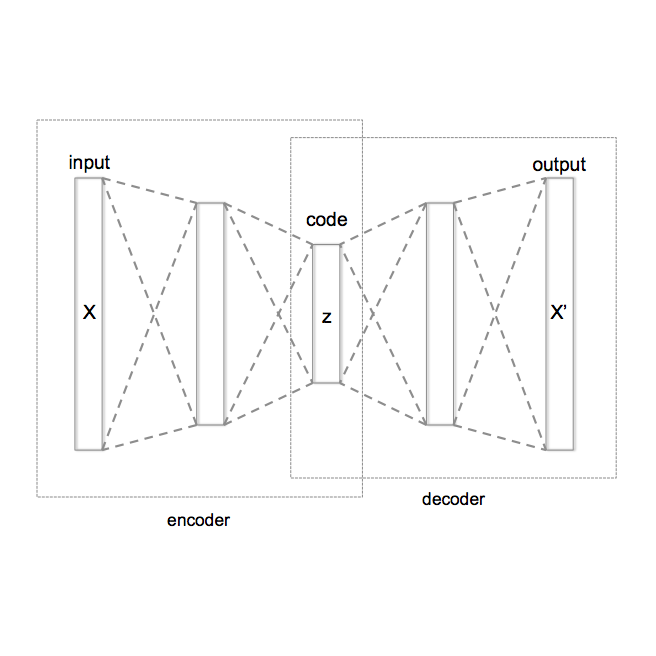
Bioacoustics data from Passive acoustic monitoring (PAM) poses a unique set of challenges for classification, particularly the limited availability of complete and reliable labels in datasets due to annotation uncertainty, biological complexity due the heterogeneity in duration of cetacean vocalizations, and masking of target sounds due to environmental and anthropogenic noise. This means that data is often weakly labelled, with annotations indicating presence/absence of species over several minutes. In order to effectively capture the complex temporal patterns and key features of lengthy continuous audio segments, we propose an interdisciplinary framework comprising dataset standardisation, feature extraction via Variational Autoencoders (VAE) and classification via Temporal Convolutional Networks (TCN). This approach eliminates the necessity for manual threshold setting or time-consuming strong labelling. To demonstrate the effectiveness of our approach, we use sperm whale (<i>Physeter macrocephalus</i>) click trains in 4-minute recordings as a case study, from a dataset comprising diverse sources and deployment conditions to maximise generalisability. The value of feature extraction via the VAE is demonstrated by comparing classification performance against the traditional and explainable approach of expert handpicking of features. The TCN demonstrated robust classification capabilities achieving AUC scores exceeding 0.9.
翻译:暂无翻译




相关内容



 微信扫码咨询专知VIP会员