

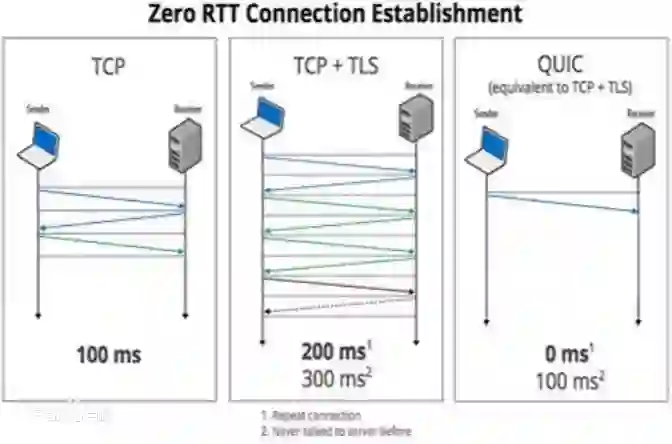
The proliferation of Extended Reality (XR) applications, requiring high-quality, low-latency media streaming, has driven the demand for efficient remote rendering solutions. This paper focuses on holographic conferencing in virtual environments and their required uplink and downlink media transmission capabilities. By examining Media over QUIC (MoQ), Real-time Transport Protocol (RTP) over QUIC (RoQ), and Web Real-Time Communication (WebRTC), we assess their latency performance over Wi-Fi and 5G networks. Improvements of approximately 30% in latency and 60% in connection startup are expected in QUIC-based protocols compared to WebRTC. The experimental setup transmits a remote-rendered virtual experience using real-time video streaming protocols to provide the content to the participant. Our findings contribute to understanding the maturity of streaming protocols, particularly within open-source frameworks, and evaluate their suitability in supporting latency-sensitive XR applications. The study highlights specific protocol advantages across varied remote rendering scenarios, informing the design of future XR communication solutions.
翻译:扩展现实(XR)应用的普及,对高质量、低延迟的媒体流传输提出了需求,从而推动了对高效远程渲染解决方案的研究。本文聚焦于虚拟环境中的全息会议及其所需的上行与下行媒体传输能力。通过研究基于QUIC的媒体传输(MoQ)、基于QUIC的实时传输协议(RoQ)以及网页实时通信(WebRTC),我们评估了它们在Wi-Fi和5G网络下的延迟性能。与WebRTC相比,基于QUIC的协议预计在延迟方面有约30%的改善,在连接建立时间方面有约60%的改善。实验设置通过实时视频流协议传输远程渲染的虚拟体验,从而向参与者提供内容。我们的研究结果有助于理解流媒体协议(尤其是在开源框架内)的成熟度,并评估它们在支持对延迟敏感的XR应用方面的适用性。本研究突出了不同远程渲染场景下特定协议的优势,为未来XR通信解决方案的设计提供了参考。




相关内容




 微信扫码咨询专知VIP会员