

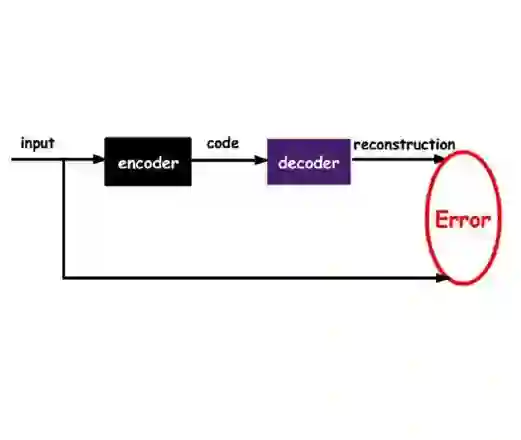
In real-world recommender systems, user-item interactions are Missing Not At Random (MNAR), as interactions with popular items are more frequently observed than those with less popular ones. Missing observations shift recommendations toward frequently interacted items, which reduces the diversity of the recommendation list. To alleviate this problem, Inverse Propensity Scoring (IPS) is widely used and commonly models propensities based on a power-law function of item interaction frequency. However, we found that such power-law-based correction overly penalizes popular items and harms their recommendation performance. We address this issue by redefining the propensity score to allow broader item recommendation without excessively penalizing popular items. The proposed score is formulated by applying a sigmoid function to the logarithm of the item observation frequency, maintaining the simplicity of power-law scoring while allowing for more flexible adjustment. Furthermore, we incorporate the redefined propensity score into a linear autoencoder model, which tends to favor popular items, and evaluate its effectiveness. Experimental results revealed that our method substantially improves the diversity of items in the recommendation list without sacrificing recommendation accuracy.
翻译:在现实世界的推荐系统中,用户-物品交互存在非随机缺失现象,因为与热门物品的交互比与冷门物品的交互更频繁地被观测到。缺失观测会使推荐结果偏向频繁交互的物品,从而降低推荐列表的多样性。为缓解此问题,逆倾向性评分被广泛使用,其通常基于物品交互频率的幂律函数对倾向性进行建模。然而,我们发现这种基于幂律的校正会过度惩罚热门物品,损害其推荐性能。我们通过重新定义倾向性评分来解决这一问题,使其能够在不过度惩罚热门物品的前提下实现更广泛的物品推荐。所提出的评分通过对物品观测频率的对数应用sigmoid函数来构建,既保持了幂律评分的简洁性,又允许更灵活的调整。此外,我们将重新定义的倾向性评分整合到倾向于偏好热门物品的线性自编码器模型中,并评估其有效性。实验结果表明,我们的方法在保持推荐准确性的同时,显著提升了推荐列表中物品的多样性。




相关内容


 微信扫码咨询专知VIP会员