

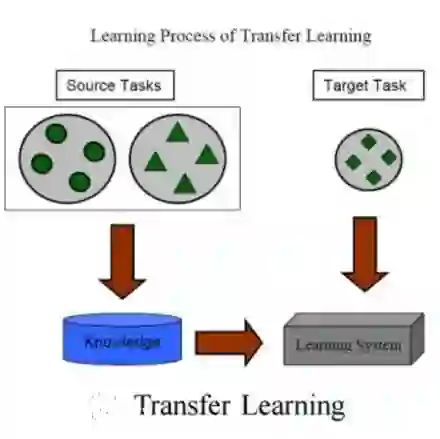
In this paper, we explore the predictive capabilities of echo state networks (ESNs) for the generalized Kuramoto-Sivashinsky (gKS) equation, an archetypal nonlinear PDE that exhibits spatiotemporal chaos. Our research focuses on predicting changes in long-term statistical patterns of the gKS model that result from varying the dispersion relation or the length of the spatial domain. We use transfer learning to adapt ESNs to different parameter settings and successfully capture changes in the underlying chaotic attractor. Previous work has shown that transfer learning can be used effectively with ESNs for single-orbit prediction. The novelty of our paper lies in our use of this pairing to predict the long-term statistical properties of spatiotemporally chaotic PDEs. We also show that transfer learning nontrivially improves the length of time that predictions of individual gKS trajectories remain accurate.
翻译:本文探讨了回声状态网络(ESNs)对广义Kuramoto-Sivashinsky(gKS)方程的预测能力,该方程是展现时空混沌的典型非线性偏微分方程。我们的研究重点在于预测gKS模型长期统计模式的变化,这些变化源于色散关系或空间域长度的改变。我们利用迁移学习使ESNs适应不同的参数设置,并成功捕捉了底层混沌吸引子的变化。先前的研究表明,迁移学习可有效结合ESNs用于单轨道预测。本文的创新之处在于利用这种组合方法来预测时空混沌偏微分方程的长期统计特性。我们还证明,迁移学习能显著提升对单个gKS轨迹预测保持准确的时间长度。




相关内容



 微信扫码咨询专知VIP会员